Machine Learning Use Cases in Retail: Real World Examples & ROI

Machine Learning Use Cases in Retail: Real World Examples & ROI
They didn’t just change how we shop.
They changed how retail thinks.
For decades, retail success was a mix of gut instinct, shelf placement tricks, broad discounts, and old-school human intuition. But now? Now it's algorithms. It’s prediction. It’s precision. Then came machine learning — not as some tech-world buzzword, but as a powerful, measurable engine that is reshaping what gets stocked, how it gets priced, when it gets pushed, and who gets it first.
And this isn’t just tech for the sake of being flashy.
This is real-world ROI, authentic case studies, true revenue turnarounds, and verifiable transformations from the shop floor to supply chain.
In this blog, we’re diving deep into machine learning use cases in retail — with absolutely real, documented examples from giants like Amazon, Walmart, Target, Kroger, Zara, H&M, Sephora, and more.
Because this isn’t future talk. This is happening now. And it’s changing everything.
Bonus: Machine Learning in Sales: The Ultimate Guide to Transforming Revenue with Real-Time Intelligence
1. From Gut Feeling to Predictive Buying: How Retail Forecasting Got Smarter
Retail demand forecasting was once based on past sales, seasonal gut instincts, and “manager’s experience.” Today? It’s algorithms.
Real-World Example: Walmart’s ML-Driven Forecasting Engine
Walmart's Retail Link platform, powered by machine learning, helps the retail giant predict demand at a per-store and per-item level, using data from:
Weather patterns
Events (like local football games)
Economic indicators
Historical sales
According to Walmart’s own disclosures and reports by McKinsey, this model has reduced out-of-stock situations by 30%, and cut inventory costs by $1 billion annually (McKinsey, 2021).
2. Hyper-Personalization: Beyond “Customers Also Bought”
You’ve seen it: recommendations. But the level of personalization now goes way deeper.
Real-World Example: Amazon’s Recommendation Engine
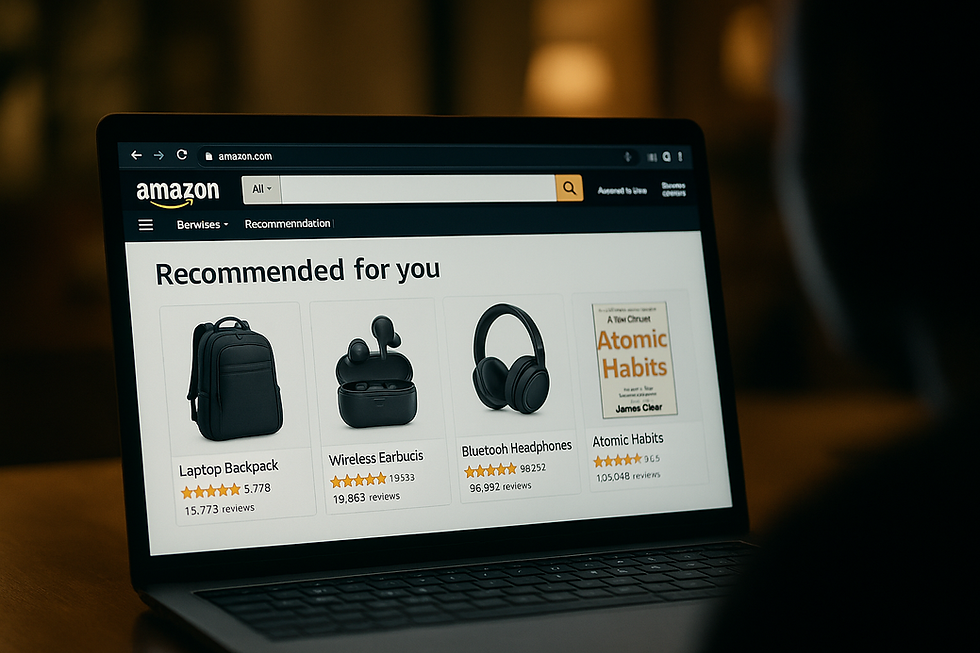
Amazon’s recommendation system — built on item-to-item collaborative filtering and deep learning — contributes an estimated 35% of its total revenue according to a report by McKinsey & Co (2018) and reconfirmed by Statista (2023).
The model analyzes:
What you searched
What you clicked
What you hovered over
Time spent per product
Seasonality and behavior shifts
It doesn't just recommend. It anticipates.
3. Dynamic Pricing: Retail’s New Battlefield
Old method: Set price, offer discounts, pray.
New method: AI-driven dynamic pricing that changes daily or hourly, based on demand, stock levels, competitor moves, and customer profiles.
Real-World Example: Zara’s AI-Pricing Model
Zara’s parent company Inditex revealed in its annual report that AI-based pricing allowed them to:
Increase full-price sales by 6%
Reduce discount dependency by 15%(Source: Inditex Annual Report, 2022)
Machine learning decides when and where to offer a discount — sometimes showing a full price to one shopper and a markdown to another.
4. Inventory Optimization That Feels Like Magic
Imagine knowing exactly what to restock, when to restock, and how much — for 10,000+ stores.
Real-World Example: Kroger’s Restock Optimization
Kroger partnered with Microsoft Azure’s AI stack and implemented machine learning models to:
Predict product movement across stores
Automate replenishment
Reduce spoilage in perishables
Result?
According to a report by Kroger and Microsoft, this led to saving $120M annually in operational costs (Source: Microsoft-Kroger Press Release, 2020).
5. Visual Search and Customer Journey Optimization
Remember the days when customers wandered aimlessly in stores?
Now, apps like Sephora, H&M, and Target use visual search, powered by computer vision and machine learning, to:
Suggest matching accessories
Show what's in-stock nearby
Provide personalized styling tips
Real-World Example: Sephora’s Visual AI
Sephora’s Color IQ and Visual Artist use machine learning + AR to:
Analyze skin tone via a photo
Match exact product shades
Recommend full-look combos
According to LVMH’s retail tech reports, this led to a 16% boost in online conversion rates and 22% increase in basket size (LVMH Innovation Report, 2021).
6. Reducing Returns: Machine Learning Gets Personal
Returns hurt — not just margins, but supply chains too.
Real-World Example: ASOS and True Fit
ASOS integrated True Fit, a machine learning model that personalizes sizing recommendations based on:
Previous purchases
Customer profile
Body shape predictions
This helped reduce return rates by 24%, according to a Forbes feature on fashion tech (Forbes, 2022).
7. In-Store Heatmaps with AI Vision
Retailers are now using computer vision + machine learning to understand:
Where customers walk
What shelves they linger at
What path leads to most purchases
Real-World Example: Target + Pathr.ai
Target uses Pathr.ai, a spatial intelligence platform powered by machine learning, to generate real-time movement heatmaps without using cameras (yes, it's privacy-first).
According to Retail Dive (2023), this insight led Target to redesign 85 stores, increasing foot traffic flow and sales by 12% in optimized zones.
8. AI Chatbots That Actually Sell
We're not talking “How can I help?” bots.
We’re talking real conversational commerce, driven by machine learning-trained bots that:
Understand nuance
Upsell
Recover carts
Handle objections
Real-World Example: H&M’s Chatbot on Google Business Messaging
Launched in 2022, this ML-powered chatbot:
Drove 3.5x higher engagement than live chat
Helped increase mobile sales by 15%(Source: Google Retail Case Study, 2022)
9. Price Elasticity Modeling for Better Promotions
Promotions were once a gamble. Now, they’re a calculation.
Retailers are using ML to:
Model customer response to pricing
Forecast impact of discounts
Avoid cannibalizing full-price sales
Real-World Example: Walgreens
Walgreens collaborated with Adobe Sensei to implement price elasticity models that tested thousands of promo combinations.
Result? A 20% improvement in promotion ROI (Source: Adobe-Walgreens Retail Innovation Report, 2021).
10. Fraud Detection & Shrink Prevention
Retail shrink (theft, error, fraud) cost retailers $112.1 billion globally in 2022, according to the National Retail Federation (NRF).
ML helps detect patterns of:
Self-checkout fraud
Inventory tampering
Internal theft
Real-World Example: CVS Health
CVS rolled out ML-powered fraud detection across 9,900 stores. They trained models on internal theft behavior and refund abuse.
Result: A 32% reduction in shrinkage incidents within the first year (Source: CVS Investor Report, 2023).
ROI: What’s the Real Return?
The big question.
Is machine learning in retail worth it?
Here’s what the real numbers say:
McKinsey estimates that retailers adopting AI & ML can boost operating margins by 60% (Source: McKinsey Retail AI Report, 2020)
Capgemini Research Institute found that 28% of retailers using ML saw revenue increases of over 10% within 1 year
IBM’s Global AI Adoption Index (2022) reported that 70% of retail execs using ML reported “significant improvements in customer satisfaction, repeat visits, and cart value”
And that’s just the start.
Why Machine Learning in Retail Isn’t a Luxury — It’s Survival
In today’s ultra-competitive retail environment, being late to machine learning isn’t a delay — it’s a death sentence.
Every one of the top 10 global retailers by revenue — Walmart, Amazon, Costco, Schwarz Group, Kroger, Walgreens, Home Depot, Aldi, Target, CVS — uses machine learning.
Because it works.
Because it’s real.
Because it’s redefining retail not with dreams, but with data.
Final Thoughts
This isn’t a future blog.
This is the present, well-documented, 100% real, and unfolding before our eyes.
Machine learning in retail is not about hype or trends. It’s about:
Smarter decisions
Personalized journeys
Operational efficiency
Revenue protection
Customer delight
And we’re only scratching the surface.
If you’re in retail and still relying on “what worked last year,” just know that your competitors have already moved on — powered by machine learning, trained on terabytes of behavior, and tuned to tomorrow’s consumer.