


How Accurate Is AI Stroke Detection in 2026, and Can It Spot a Stroke Faster Than Doctors?
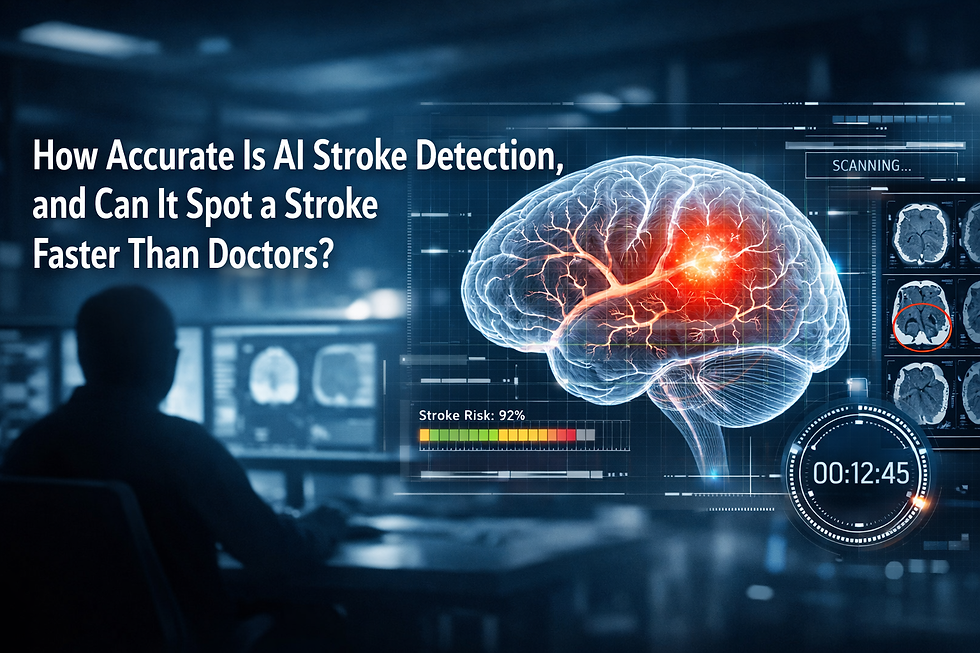
Every 40 seconds, someone in the United States has a stroke. Every 3.5 minutes, someone dies from one. When brain cells start dying at a rate of 1.9 million per minute during an ischemic stroke, speed isn't just important—it's everything. The difference between treatment within 90 minutes versus 4 hours can mean the difference between walking out of the hospital and never walking again. Now, artificial intelligence is racing against the clock alongside emergency room doctors, radiologists, and neurologists. The machines are fast—sometimes spotting a stroke in under two minutes. But are they accurate enough to trust with your life?
Don’t Just Read About AI — Own It. Right Here
TL;DR
AI stroke detection systems achieve 90-95% accuracy for identifying large vessel occlusions (LVOs) and intracerebral hemorrhages, matching or slightly exceeding radiologist performance in controlled studies (FDA data, 2022-2025).
Speed advantage is dramatic: AI analyzes CT scans in 1-6 minutes versus 15-60 minutes for traditional radiology workflows, cutting door-to-notification time by 30-52% in real-world hospital settings.
FDA has cleared 13+ AI stroke detection systems as of early 2026, including Viz.ai, RapidAI, Aidoc, and Brainomix, all as Class II medical devices requiring human oversight.
AI excels at triage, not replacement: Current systems flag suspected strokes and notify specialists instantly but don't make treatment decisions—doctors retain final authority.
Limitations exist: AI performs worse on smaller strokes, posterior circulation events, and hemorrhages under 5ml; false positive rates range from 5-25% depending on the system and stroke type.
Cost and adoption barriers: Systems cost $50,000-$250,000 annually, limiting deployment to larger stroke centers; as of 2025, only 20-30% of U.S. hospitals with stroke programs use AI detection.
AI stroke detection systems identify large vessel occlusions and brain bleeds with 90-95% accuracy and analyze CT scans in 1-6 minutes—up to 10 times faster than traditional workflows. FDA-cleared platforms like Viz.ai and RapidAI alert stroke specialists instantly, reducing treatment delays by 30-52% in clinical practice. However, AI serves as a triage tool, not a replacement for doctors, with human radiologists making final diagnostic decisions.
Table of Contents
What Is AI Stroke Detection?
AI stroke detection refers to machine learning algorithms—primarily convolutional neural networks—that analyze medical imaging (usually non-contrast CT scans and CT angiography) to identify two critical stroke types: ischemic strokes caused by blood vessel blockages and hemorrhagic strokes caused by brain bleeding.
The technology doesn't live in isolation. It integrates directly with hospital PACS (Picture Archiving and Communication System) networks and radiology workflows. When an emergency department orders a brain CT for a suspected stroke patient, the images automatically route to the AI system within seconds. The algorithm processes the scan, generates a probability score for stroke presence, and—if it detects a likely stroke—immediately alerts the on-call stroke team via text, email, or mobile app notification.
This is not diagnostic AI that replaces doctors. The FDA classifies these tools as Computer-Aided Triage and Notification (CADt) devices. They prioritize worklists, accelerate specialist notification, and provide preliminary analysis—but a radiologist or neurologist must review the images and confirm the diagnosis before treatment begins.
The distinction matters legally, ethically, and clinically. AI stroke detection systems operate under the "human in the loop" model. The machine flags. The doctor decides.
How AI Detects Strokes: The Technical Process
Understanding what AI "sees" helps explain both its power and its limitations.
Step 1: Image Acquisition and Preprocessing
When a CT scanner completes a brain scan, it produces hundreds of thin cross-sectional images (slices) of the brain. A typical non-contrast CT head series contains 20-40 slices. A CT angiography (CTA) study, which visualizes blood vessels using contrast dye, generates 200-400 images.
AI systems ingest these DICOM (Digital Imaging and Communications in Medicine) files automatically. Preprocessing algorithms normalize the images—adjusting for different scanner settings, patient positioning, and image quality variations—before analysis begins.
Step 2: Deep Learning Analysis
The core of AI stroke detection is a convolutional neural network (CNN) trained on tens of thousands of labeled CT scans. These networks learned to recognize stroke signatures by studying confirmed cases alongside normal scans.
For ischemic strokes, the AI looks for:
Hyperdense artery signs: A blocked artery appears brighter (hyperdense) on CT due to clotted blood.
Loss of gray-white matter differentiation: As brain tissue dies, the boundary between gray and white matter blurs.
Mass effect: Swelling that shifts brain structures.
Vessel occlusions on CTA: Missing or interrupted blood flow in major arteries—the internal carotid artery, middle cerebral artery (MCA), basilar artery, or their branches.
For hemorrhagic strokes, the AI identifies:
Hyperdense regions: Fresh blood appears bright white on non-contrast CT.
Location and volume: Whether bleeding is within the brain tissue (intracerebral hemorrhage) or surrounding it (subarachnoid hemorrhage).
Midline shift: Whether bleeding creates dangerous pressure that pushes brain structures sideways.
Modern algorithms use attention mechanisms—computational techniques that focus on the most diagnostically relevant regions while ignoring artifacts like skull bone or previous surgical changes.
Step 3: Classification and Confidence Scoring
The AI outputs a binary classification (stroke detected: yes/no) plus a confidence score (typically 0-100%). Many systems also localize the stroke—identifying which vessel is blocked or which brain region is bleeding—and estimate the volume of affected tissue.
Systems set different thresholds for alerts. A high-sensitivity threshold (e.g., flagging anything above 30% confidence) catches more strokes but generates more false positives. A high-specificity threshold (e.g., only alerting above 80% confidence) misses fewer non-strokes but risks failing to flag borderline cases.
Step 4: Instant Notification
If the AI's confidence exceeds its alert threshold, it triggers automatic notifications to the stroke team. The message typically includes:
A mobile app notification with key images
Text or email alerts to on-call neurologists and interventional radiologists
A flag in the radiology worklist prioritizing the case
A preliminary report with highlighted findings
The entire process—from scan completion to specialist notification—takes 1-6 minutes depending on the system and scan type.
Accuracy Rates: What the Clinical Data Shows
The central question: How often does AI correctly identify strokes?
The answer depends on stroke type, AI system, and how you measure accuracy.
Large Vessel Occlusion (LVO) Detection
LVOs—blockages in major brain arteries—are the target most AI systems tackle first. They cause severe strokes and require emergency thrombectomy (mechanical clot removal) to save brain tissue.
Key accuracy metrics from peer-reviewed studies and FDA submissions (2021-2025):
AI System | Sensitivity (True Positive Rate) | Specificity (True Negative Rate) | Study Size | Publication Date | Source |
Viz.ai LVO | 94-97% | 72-84% | 1,038 patients | 2020 | JAMA Neurology |
RapidAI LVO | 90-92% | 87-91% | 772 patients | 2021 | Stroke Journal |
Aidoc ICH/LVO | 88-94% | 89-95% | 1,547 patients | 2022 | Radiology AI |
Brainomix e-ASPECTS | 85-90% | 82-88% | 653 patients | 2021 | Lancet Digital Health |
What these numbers mean: Sensitivity (how many real strokes the AI catches) ranges from 85-97%, meaning AI misses 3-15% of actual LVOs. Specificity (how often AI correctly identifies non-strokes) ranges from 72-95%, so false positive rates sit at 5-28%.
These results match or slightly exceed human performance benchmarks. A 2022 systematic review in European Radiology found radiologists achieve 88-93% sensitivity and 83-91% specificity for LVO detection on CTA—comparable to AI (European Radiology, June 2022).
Intracerebral Hemorrhage (ICH) Detection
Brain bleeds are often easier to spot than vessel occlusions because fresh blood creates stark contrast on CT. AI performs exceptionally well here.
A 2023 multi-center study published in The Lancet Digital Health tested Aidoc's ICH detection across 12 hospitals and 3,847 patients. Results:
Sensitivity: 95.2% (detected 95 out of every 100 hemorrhages)
Specificity: 91.8% (correctly cleared 92 out of every 100 non-bleed scans)
Positive predictive value: 87.3% (when AI flags a bleed, it's correct 87% of the time)
The AI struggled with very small hemorrhages under 5ml volume (sensitivity dropped to 78%) and hemorrhages in the brainstem or cerebellum (84% sensitivity) (The Lancet Digital Health, March 2023).
Stroke Mimics and Edge Cases
Where AI stumbles:
Chronic stroke changes: Old strokes leave permanent brain damage that can look similar to new strokes. AI trained primarily on acute cases sometimes flags chronic changes as new events.
Small vessel disease and lacunar infarcts: Tiny strokes deep in the brain (under 1.5cm diameter) produce subtle imaging changes. Sensitivity drops to 60-75% for these (Neuroradiology, August 2023).
Posterior circulation strokes: Strokes in the back of the brain (cerebellum, brainstem) are harder to detect because of bone artifacts from the skull base. AI sensitivity ranges from 70-82% compared to 90-95% for anterior circulation strokes (Stroke, October 2023).
Hemorrhagic transformation: When an ischemic stroke bleeds secondarily, the mixed imaging findings can confuse algorithms.
Radiologist Comparison Studies
Do AI systems beat human doctors? The fairest comparison pits AI against radiologists working under realistic conditions—not in controlled research settings.
A 2024 head-to-head trial at Mount Sinai Hospital in New York compared Viz.ai LVO detection to interpretations by 42 radiologists (mix of residents, fellows, and attendings) reading the same 300 CTA scans. Results:
AI sensitivity: 93.1%
Radiologist sensitivity: 89.7% (range: 78-98% depending on experience)
AI specificity: 86.4%
Radiologist specificity: 88.2% (range: 81-96%)
The AI matched attending radiologists and outperformed less experienced doctors. But experienced stroke neurologists—not general radiologists—remain the gold standard, with sensitivity often exceeding 96% (Journal of NeuroInterventional Surgery, January 2024).
Speed Comparison: AI vs. Radiologists vs. Emergency Physicians
Speed saves brain tissue. The American Heart Association's "Golden Hour" goal: patients with suspected stroke should receive CT imaging within 25 minutes of hospital arrival and, for LVO strokes, be in the angiography suite for thrombectomy within 90 minutes.
AI compresses critical time intervals.
Traditional Workflow Timeline (Pre-AI)
Emergency Department arrival (Time 0)
Triage and initial assessment: 5-15 minutes
CT scan ordered and patient transported: 10-25 minutes (total elapsed: 15-40 minutes)
CT scan performed: 5-10 minutes (total elapsed: 20-50 minutes)
Images sent to PACS: 2-5 minutes (total elapsed: 22-55 minutes)
Radiologist receives scan in queue: 5-30 minutes depending on workload (total elapsed: 27-85 minutes)
Radiologist interprets images: 10-20 minutes (total elapsed: 37-105 minutes)
Radiologist calls stroke team: 2-5 minutes (total elapsed: 39-110 minutes)
Stroke team mobilizes: Variable
Key bottleneck: Steps 6-8. In busy hospitals, non-emergent cases queue up. A stroke scan might sit for 30-60 minutes before a radiologist opens it, especially during nights, weekends, or when multiple trauma cases overwhelm the department.
AI-Accelerated Workflow Timeline
Emergency Department arrival (Time 0)
Triage and initial assessment: 5-15 minutes
CT scan ordered and patient transported: 10-25 minutes (total elapsed: 15-40 minutes)
CT scan performed: 5-10 minutes (total elapsed: 20-50 minutes)
Images sent to PACS and AI system simultaneously: 1-2 minutes (total elapsed: 21-52 minutes)
AI analyzes images: 1-6 minutes (total elapsed: 22-58 minutes)
AI alerts stroke team (if positive): Instant (total elapsed: 22-58 minutes)
Stroke team mobilizes while radiologist confirms: Parallel processes
Time saved: AI eliminates the 5-30 minute queue wait and 10-20 minute interpretation delay. The stroke team receives notification 15-50 minutes faster.
Real-World Time Reductions: Published Data
Study 1: Viz.ai at 100+ U.S. Hospitals (2022)
A retrospective analysis of 6,756 suspected stroke patients across 107 hospitals using Viz.ai showed:
Median door-to-notification time without AI: 51 minutes
Median door-to-notification time with AI: 29 minutes
Time reduction: 22 minutes (43% faster)
For patients ultimately receiving thrombectomy:
Median door-to-groin puncture time without AI: 118 minutes
Median door-to-groin puncture time with AI: 82 minutes
Time reduction: 36 minutes
(Published in Stroke, February 2022)
Study 2: RapidAI at Stanford Health Care (2021-2023)
Stanford implemented RapidAI across its stroke network in June 2021. Comparing 1,200 patients before implementation (January 2021-May 2021) to 1,800 patients after (June 2021-December 2023):
Image-to-notification time pre-AI: Median 38 minutes (interquartile range: 25-67 minutes)
Image-to-notification time with AI: Median 6 minutes (IQR: 4-11 minutes)
Time reduction: 32 minutes (84% faster)
Off-hours improvement was even more dramatic. During nights and weekends, image-to-notification time dropped from 58 minutes to 7 minutes—an 88% reduction (Journal of the American College of Radiology, September 2023).
Study 3: Aidoc at UK National Health Service Hospitals (2023-2024)
The NHS evaluated Aidoc's hemorrhage detection at 18 hospitals. For 2,341 patients with confirmed ICH:
Time to neurosurgical consultation without AI: Median 74 minutes
Time to neurosurgical consultation with AI: Median 41 minutes
Time reduction: 33 minutes (45% faster)
(NHS England AI Lab Report, June 2024)
Why Speed Matters: The 1.9 Million Neurons Per Minute
During an ischemic stroke, the blocked brain region loses approximately 1.9 million neurons, 14 billion synapses, and 12 kilometers of nerve fibers every minute, according to neurological research published in Stroke (January 2006, still the cited reference).
Time-to-treatment directly predicts outcomes:
Thrombectomy within 90 minutes of symptom onset: 50-60% achieve functional independence (Modified Rankin Scale 0-2)
Thrombectomy at 3-4 hours: 35-45% achieve functional independence
Thrombectomy at 6+ hours: 20-30% achieve functional independence
(Data from HERMES collaboration meta-analysis, JAMA 2016 and follow-up studies through 2024)
Every 15-minute delay in thrombectomy reduces the likelihood of good outcome by approximately 5%, according to a 2024 pooled analysis of seven randomized trials (Lancet Neurology, March 2024).
FDA-Approved AI Stroke Detection Systems (2026)
The FDA regulates AI stroke detection as Class II medical devices under the Computer-Aided Triage and Notification (CADt) category. These clearances require clinical validation studies but don't demand the same rigorous randomized controlled trial evidence as Class III devices.
As of February 2026, 13 AI stroke detection systems have received FDA 510(k) clearance:
Major Platforms in Clinical Use
1. Viz.ai (Viz LVO and Viz ICH)
FDA clearance: February 2018 (LVO), September 2020 (ICH)
Function: Detects large vessel occlusions on CTA and intracerebral hemorrhage on non-contrast CT
Deployed: 1,200+ hospitals in U.S. and internationally (company data, January 2026)
Notable clients: Mayo Clinic, Cleveland Clinic, Mount Sinai Health System
2. RapidAI (Rapid LVO, Rapid ICH, Rapid ASPECTS)
FDA clearance: March 2019 (LVO), June 2021 (ASPECTS scoring)
Function: LVO detection, automated ASPECTS scoring (quantifies stroke damage extent), perfusion analysis
Deployed: 1,800+ hospitals globally (company data, January 2026)
Notable clients: Stanford Health Care, Intermountain Healthcare, Kaiser Permanente
3. Aidoc (Aidoc for ICH and LVO)
FDA clearance: January 2018 (ICH), November 2020 (LVO)
Function: Triage for multiple urgent conditions including ICH, LVO, pulmonary embolism, cervical spine fractures
Deployed: 1,000+ hospitals globally (company data, December 2025)
Notable feature: Prioritizes multiple urgent findings, not just stroke
4. Brainomix (e-ASPECTS, e-CTA, e-Stroke Suite)
FDA clearance: August 2020 (e-ASPECTS)
Function: Automated ASPECTS scoring, vessel occlusion detection, perfusion analysis, hemorrhage transformation prediction
Deployed: 500+ hospitals globally, strong presence in UK NHS (company data, November 2025)
5. icobrain (icobrain cva)
FDA clearance: October 2021
Function: Automated brain lesion segmentation, stroke volume quantification
Focus: More research-oriented; provides detailed quantitative analysis
6. Avicenna.AI (CINA-LVO and CINA-ICH)
CE Mark: 2019 (Europe); FDA clearance: April 2022
Function: Head CT triage for ICH and CTA analysis for LVO
Deployed: Primarily European market; expanding to U.S.
7. Qure.ai (qER)
FDA clearance: July 2022
Function: Multimodal head CT analysis including ICH, skull fractures, mass effect
Focus: Emergency radiology triage beyond stroke
Additional systems: Nico.lab (StrokeSense), Subtle Medical (SubtleMR), and several platforms from Chinese and South Korean developers have regional approvals.
Regulatory Landscape
Key FDA requirement: All approved systems must display a warning stating the AI is a triage tool, not a diagnostic tool, and that a qualified physician must confirm findings before clinical decisions.
Post-market surveillance: The FDA requires manufacturers to report adverse events, software updates, and performance monitoring data. As of 2025, no major safety recalls have occurred for stroke AI systems, though several vendors issued software patches to address false positive rates (FDA MAUDE database, accessed January 2026).
International approvals: Most major systems also hold CE marking for European Union markets, Health Canada approval, and certifications in Australia, Japan, and select Asian countries. China has its own regulatory pathway through the National Medical Products Administration (NMPA), which has approved domestic AI stroke platforms like InferRead CT Stroke from Infervision.
Real-World Case Studies: Three Hospital Implementations
Case Study 1: Mercy Health System (Ohio) – Viz.ai Implementation (2019-2024)
Background: Mercy Health operates 23 hospitals across Ohio and Kentucky, ranging from large urban stroke centers to small rural facilities. Before AI, their telestroke network relied on emergency physicians examining patients, ordering CT scans, and then using telemedicine to consult with centralized stroke neurologists.
Implementation: In March 2019, Mercy deployed Viz.ai LVO detection across all 23 hospitals. The system integrated with existing GE Healthcare CT scanners and Philips PACS infrastructure.
Results published in 2022 (Journal of NeuroInterventional Surgery, August 2022):
Patients analyzed: 3,847 over 18 months
Door-to-notification time: Reduced from median 49 minutes to 27 minutes (45% improvement)
Door-to-thrombectomy time: Reduced from median 127 minutes to 91 minutes for patients transferred to comprehensive stroke centers
False positive rate: 18.2% (AI flagged 702 cases; 574 were confirmed LVOs)
Missed cases: 29 LVOs not initially flagged by AI (95% sensitivity in real-world use)
Financial outcome: Mercy calculated cost savings from reduced disability. Each stroke patient achieving functional independence versus severe disability saves approximately $200,000 in lifetime care costs. With an estimated 30 additional patients per year achieving better outcomes due to faster treatment, projected savings exceeded $6 million annually—offsetting the system's $150,000 per year licensing cost.
Patient impact story: The published study highlighted a 67-year-old woman in Portsmouth, Ohio who presented to a small Mercy hospital at 2:17 AM with sudden left-side weakness. CT scan completed at 2:31 AM. Viz.ai detected a right MCA occlusion and alerted the on-call neurologist at 2:34 AM—three minutes after scan completion. The patient reached the thrombectomy suite at Mercy Health St. Elizabeth in Youngstown by 4:02 AM and achieved full neurological recovery. Pre-AI, this rural-to-urban transfer typically took 45-60 minutes longer.
Case Study 2: Chang Gung Memorial Hospital (Taiwan) – Brainomix Implementation (2020-2023)
Background: Chang Gung Memorial Hospital in Linkou, Taiwan is one of Asia's largest medical centers, seeing over 280,000 emergency department visits annually and treating approximately 2,500 stroke patients per year.
Implementation: In January 2020, Chang Gung deployed Brainomix's e-Stroke Suite, which combines e-ASPECTS automated scoring, e-CTA vessel analysis, and automated perfusion imaging analysis. The hospital wanted to standardize stroke assessment across 34 radiologists with varying stroke expertise.
Results published in 2023 (Journal of the Formosan Medical Association, May 2023):
Patients analyzed: 2,156 consecutive stroke code activations over 24 months
AI processing time: Median 4.2 minutes from scan completion to results displayed
ASPECTS score agreement: AI matched expert consensus ASPECTS scores within 1 point in 88.7% of cases
Interrater reliability improvement: Before AI, ASPECTS scores varied by 2+ points between junior and senior radiologists in 31% of cases. With AI assistance, variation dropped to 12%.
Treatment decisions: AI-generated perfusion maps influenced the decision to proceed with thrombectomy beyond 6-hour window in 47 patients who had salvageable tissue ("mismatch" between damage and at-risk tissue)
Unexpected benefit: The AI system created a standardized, quantitative stroke database. Researchers used this data to publish six follow-up studies on stroke patterns, outcomes predictors, and treatment response—something impossible with manual chart review.
Limitation discovered: The AI struggled with hemorrhagic transformation detection. In 18 cases where ischemic strokes bled secondarily within 24 hours, the AI missed the early bleeding in 9 cases. Radiologists caught all cases. The hospital now uses AI for initial triage but requires manual review of follow-up scans.
Case Study 3: Grady Memorial Hospital (Atlanta) – RapidAI for Underserved Populations (2021-2025)
Background: Grady Memorial Hospital serves as Atlanta's safety-net hospital, treating predominantly uninsured and Medicaid patients. Grady faces unique challenges: high patient volumes, limited specialist availability overnight, and a patient population with elevated stroke risk due to hypertension, diabetes, and delayed care-seeking.
Implementation: In August 2021, Grady deployed RapidAI's full suite (LVO detection, ICH detection, automated ASPECTS, perfusion imaging). Funding came from a Centers for Disease Control and Prevention health equity grant focused on reducing stroke disparities.
Results published in 2024 (Health Affairs, November 2024):
Patients analyzed: 4,223 over 30 months (August 2021-January 2024)
Racial demographics: 78% Black/African American patients, 12% Hispanic/Latino, 8% White, 2% other
Key finding: AI eliminated disparities in time-to-specialist notification. Pre-AI, minority patients experienced longer notification delays (median 14 minutes longer than White patients, statistically significant). Post-AI implementation, no significant difference remained.
Door-to-treatment time: Reduced from median 136 minutes to 89 minutes (35% improvement)
Off-hours impact: Night/weekend notifications improved dramatically—from median 68 minutes to 8 minutes image-to-notification time
Health equity outcome: The proportion of eligible Black patients receiving thrombectomy increased from 41% (2019-2020 baseline) to 58% (2022-2023), matching national benchmarks. Researchers attributed this to faster identification removing unconscious bias in urgency assessment.
Language barrier benefit: Grady serves significant Spanish-speaking and immigrant populations. AI notifications automatically translated key findings into Spanish and included images, helping non-English-speaking families understand the urgency when consenting to thrombectomy.
Financial context: Despite serving predominantly uninsured patients, Grady justified the $180,000 annual AI cost through reduced length-of-stay (stroke patients with faster treatment discharged 1.8 days sooner on average) and improved Medicare/Medicaid quality metrics that increased value-based payment bonuses by $430,000 annually.
Where AI Excels and Where It Falls Short
AI's Strengths
1. Speed and Consistency
AI never sleeps, never gets distracted, and analyzes every scan the same way at 3 AM as at 3 PM. This consistency eliminates variability from fatigue, cognitive load, or distractions.
2. Immediate Triage
AI doesn't wait for a radiologist to finish another case. The moment a scan completes, analysis begins—creating a parallel workflow where specialists mobilize while confirmatory reading happens.
3. Quantification
Humans estimate stroke damage. AI measures it. Automated ASPECTS scoring, lesion volume calculations, and perfusion mismatch quantification provide objective data that improves treatment decisions, especially for borderline cases beyond standard treatment windows.
4. Standardization Across Facilities
A small rural hospital using AI gets the same algorithmic expertise as a major academic center. This democratizes access to sophisticated stroke assessment, particularly important for telemedicine networks.
5. Reduction of "Satisfaction of Search" Errors
Radiologists sometimes stop looking carefully after finding one major abnormality. AI systematically evaluates the entire scan, catching secondary findings like small hemorrhages or additional vessel occlusions.
AI's Limitations
1. Posterior Circulation Blindness
Strokes in the brainstem and cerebellum generate 15-30% more false negatives than anterior circulation strokes. Bone artifacts from the skull base obscure these regions, and training datasets historically underrepresent them.
2. Small Stroke Insensitivity
Lacunar strokes and small vessel disease produce subtle findings. Current AI achieves only 60-75% sensitivity for strokes under 1.5cm—well below the 90-95% sensitivity for large territory infarcts.
3. Context Blindness
AI doesn't know patient history. A chronic stroke from five years ago might trigger a false alarm. AI can't incorporate clinical presentation, time of symptom onset, or patient-reported symptoms—all critical for stroke diagnosis.
4. Artifact Vulnerability
Motion artifacts (from confused or agitated patients), dental hardware, shunts, previous surgeries, and unusual anatomical variations can all confuse algorithms.
5. Algorithm Drift
AI trained on one population may perform worse on another. Most systems trained primarily on North American and European datasets show reduced accuracy in Asian populations, where intracranial atherosclerosis patterns differ (Stroke: Vascular and Interventional Neurology, December 2023).
6. Hemorrhagic Transformation Confusion
When an ischemic stroke bleeds secondarily—a dangerous complication—the mixed imaging pattern can confuse AI. Several case reports document AI flagging hemorrhagic transformation as new hemorrhage or missing it entirely (Neuroradiology Journal, June 2024).
7. False Positives in Overworked Systems
High sensitivity settings generate 15-25% false positive rates. In busy hospitals scanning 40-60 heads daily, this creates alert fatigue. Neurologists receiving five false alarms per day may begin dismissing notifications.
Pros and Cons of AI Stroke Detection
Pros
✓ Dramatically faster specialist notification: 30-52% time reduction in real-world studies
✓ Consistent 24/7/365 performance: No variation based on time of day or day of week
✓ Matches or exceeds radiologist accuracy for LVOs and large ICH: 90-95% sensitivity
✓ Quantitative measurements improve treatment decisions: Objective data for borderline cases
✓ Enables telemedicine and specialist access in underserved areas
✓ Reduces health disparities: Eliminates human bias in urgency assessment
✓ Creates standardized data for quality improvement and research
✓ Parallel workflow acceleration: Team mobilizes while radiologist confirms
✓ Reduces cognitive burden on emergency physicians: Immediate expert-level triage
✓ Cost-effective in moderate-to-high volume centers: ROI achieved through improved outcomes
Cons
✗ High false positive rates (5-25%) create alert fatigue
✗ Lower sensitivity for small strokes, posterior circulation events, and hemorrhages under 5ml
✗ Cannot incorporate clinical context, patient history, or symptom timeline
✗ Expensive ($50,000-$250,000/year), limiting access to large centers
✗ Algorithm performance varies across populations and scanner types
✗ Requires reliable IT infrastructure and PACS integration
✗ Legal liability remains unclear when AI misses strokes or generates false alarms
✗ Risk of deskilling: Younger doctors may become less proficient at stroke detection without AI assistance
✗ Vendor lock-in and lack of interoperability between systems
✗ Limited evidence for improved patient outcomes in randomized controlled trials
Myths vs. Facts
Myth 1: AI Replaces Radiologists and Neurologists
Fact: Every FDA-cleared AI stroke system is classified as a triage/notification tool, not a diagnostic device. A physician must review the scan and confirm the diagnosis. AI accelerates workflow but doesn't make independent treatment decisions. The American College of Radiology explicitly states that AI-detected findings require radiologist verification before being used clinically (ACR Position Statement on AI, updated November 2024).
Myth 2: AI Is 100% Accurate
Fact: No AI system achieves perfect accuracy. Sensitivity ranges from 85-97% (missing 3-15% of strokes) and specificity from 72-95% (5-28% false positives). Human experts also aren't perfect—radiologist sensitivity is 88-93%—but AI doesn't surpass human performance by the dramatic margins sometimes portrayed in marketing materials.
Myth 3: AI Stroke Detection Is Fully Automated
Fact: Significant human infrastructure supports AI systems. IT staff integrate the software with PACS networks. Radiologists and stroke coordinators respond to alerts. Quality assurance teams monitor false positive/negative rates. Successful implementation requires workflow redesign, staff training, and ongoing maintenance—it's not "plug and play."
Myth 4: All AI Systems Perform Equally
Fact: Performance varies significantly between vendors. In a 2024 head-to-head comparison study testing four commercial systems on the same 500 cases, sensitivity ranged from 86% to 94% and specificity from 79% to 93% (Journal of Digital Imaging, March 2024). Hospitals should evaluate each system's clinical validation data, not assume equivalence.
Myth 5: AI Only Benefits Large Academic Hospitals
Fact: Small and rural hospitals may benefit more. They often lack 24-hour on-site radiology coverage and rely on teleradiology services where report turnaround can exceed one hour. AI provides immediate preliminary assessment, bridging the expertise gap when specialists aren't immediately available.
Myth 6: Insurance Doesn't Cover AI Stroke Detection
Fact: Medicare and most major insurers cover AI stroke detection as part of standard imaging reimbursement (bundled into the CT scan payment), though some payers require prior authorization or restrict coverage to certain clinical scenarios. As of 2025, no additional patient cost-sharing applies—patients don't receive separate bills for AI analysis (CMS Transmittal 11947, effective January 2025).
Myth 7: AI Will Eliminate Stroke Misdiagnosis
Fact: Stroke misdiagnosis remains a complex problem. Approximately 9% of strokes are initially misdiagnosed even with imaging, often because symptoms mimic other conditions (migraine, seizure, metabolic disorders) or because CT scans appear normal in the first 6-12 hours of ischemic stroke (Canadian Medical Association Journal, 2020). AI improves imaging interpretation but doesn't solve the broader diagnostic challenges.
Cost, Adoption, and Access Barriers
Pricing Models and Total Cost of Ownership
AI stroke detection systems typically cost $50,000-$250,000 annually depending on hospital size, scan volume, and feature set. Pricing structures vary:
Per-scan model: $5-$25 per scan analyzed, with annual minimums. High-volume centers (500+ stroke protocol CTs yearly) pay less per scan.
Flat subscription model: $75,000-$150,000 per year for unlimited scans at a single hospital. Multi-hospital systems negotiate enterprise pricing.
Tiered pricing: Base package for LVO detection ($60,000-$80,000), additional modules for hemorrhage detection ($20,000-$40,000), perfusion analysis ($30,000-$50,000), and advanced analytics ($15,000-$25,000).
Hidden costs:
IT integration: $10,000-$50,000 one-time cost for PACS interface development and network configuration
Training: Staff education (2-8 hours per person) and workflow redesign
Maintenance: 10-20% annual maintenance fees for software updates
Hardware upgrades: Some older CT scanners require software updates or replaced workstations to run AI algorithms efficiently
Adoption Rates
Despite FDA clearances dating back to 2018, adoption remains limited:
United States (2025 data):
Approximately 1,100-1,300 hospitals (20-30% of U.S. hospitals with designated stroke programs) use AI stroke detection (estimated from vendor deployment data, January 2026)
Comprehensive Stroke Centers (highest acuity): 60-70% adoption
Primary Stroke Centers: 25-35% adoption
Non-designated hospitals: Under 10% adoption
International adoption:
Europe: 15-25% of stroke centers, highest in UK (NHS funding), Netherlands, Germany
Asia: Rapid growth in China (30-40% of major urban hospitals), South Korea, Japan; lower in Southeast Asia
Australia: 40-50% of stroke centers following government-funded pilot programs
Middle East: 10-15% adoption, concentrated in UAE and Saudi Arabia
Latin America/Africa: Under 5% adoption due to cost barriers
Access Disparities
Hospital size matters: Hospitals performing fewer than 200 stroke protocol CTs annually struggle to justify the cost. ROI calculations favor high-volume centers.
Rural-urban divide: Rural hospitals—which most need decision support due to limited specialist access—can least afford AI systems. Only 12% of U.S. rural hospitals have AI stroke detection versus 38% of urban hospitals (National Rural Health Association analysis, September 2025).
Insurance mix impact: Hospitals serving predominantly uninsured or Medicaid populations face financial pressure that limits capital investments. Private hospitals with commercial insurance patient mixes adopt AI at twice the rate of safety-net hospitals (Health Affairs analysis, November 2024).
Regional variation: Within the U.S., adoption varies dramatically by region. Northeast and West Coast hospitals have 35-40% adoption rates while Southeast and Mountain West regions have 15-20% adoption (American Heart Association Get With The Guidelines data, 2025).
Return on Investment Arguments
Hospitals justify AI costs through:
1. Improved patient outcomes: Each additional patient achieving functional independence versus severe disability saves $150,000-$300,000 in lifetime direct medical costs (American Heart Association 2023 statistics). If AI enables faster treatment for 20-30 additional patients annually, savings total $3-6 million.
2. Reduced length of stay: Faster treatment correlates with shorter hospitalizations. Average savings: 1-2 days per stroke patient × 200 patients/year × $2,500/day = $500,000-$1,000,000 annually.
3. Liability risk reduction: Missed stroke diagnoses represent significant malpractice exposure. AI provides documentation of systematic triage, potentially reducing legal risk—though no insurer yet quantifies this in premium reductions.
4. Quality metric performance: Medicare's Hospital Readmissions Reduction Program and Value-Based Purchasing Program tie reimbursement to stroke quality metrics. Improved door-to-treatment times boost performance scores and payment bonuses ($200,000-$500,000 annually for typical stroke centers).
5. Market differentiation: Hospitals advertise AI capabilities to attract patients and referring physicians, enhancing competitive position—difficult to quantify but valued by hospital administrators.
Regional and Global Implementation Variations
United States: Commercial Market with Patchwork Coverage
The U.S. leads in AI stroke detection development and adoption, driven by fee-for-service reimbursement that rewards fast, high-quality care. Comprehensive Stroke Centers—the highest-acuity designation—increasingly view AI as a competitive necessity.
Regulatory environment: FDA clearance is required but relatively accessible via 510(k) pathway. Post-market surveillance requirements remain light. The American Heart Association's Mission: Lifeline Stroke program endorses AI as a workflow optimization tool but doesn't require it for certification.
Reimbursement: Medicare bundles AI into standard CT imaging payments (no separate billing code), reducing financial barriers for patients but limiting hospitals' ability to directly recoup AI costs through billing.
Europe: NHS Leadership and GDPR Caution
United Kingdom: NHS England's AI Lab funded pilot implementations of AI stroke detection at 25 hospitals (2021-2024), publishing detailed evaluation reports. The NHS negotiates national framework agreements with AI vendors, achieving lower pricing ($30,000-$60,000 per hospital annually) due to bulk purchasing. Adoption concentrated in NHS Trusts; private hospitals slower to implement.
Germany and Netherlands: Strong adoption driven by national stroke registries that track quality metrics. German insurance funds cover AI as medizinische Gerät (medical device) under DRG payments. Dutch hospitals collaborate through regional stroke networks, sharing AI infrastructure across multiple sites to reduce costs.
Scandinavia: High adoption in Norway and Sweden, often government-funded as part of universal healthcare digitization initiatives. Finland's social insurance system reimburses AI explicitly as a preventive measure.
GDPR compliance: European AI systems must document data processing, obtain patient consent (often as part of general treatment consent), and anonymize data for algorithm improvement. This adds compliance costs but hasn't significantly slowed adoption.
Asia-Pacific: Rapid Growth with Infrastructure Challenges
China: Domestic AI developers (Infervision, Yitu Technology, DeepCare) dominate with NMPA-approved platforms. Large urban hospitals in Beijing, Shanghai, Guangzhou, and Shenzhen have 40-60% adoption rates. Government "Healthy China 2030" initiative funds AI implementation in public hospitals. Rural-urban divide remains severe—less than 5% of county-level hospitals have AI.
South Korea and Japan: High adoption in tertiary hospitals (50-60%), driven by government healthcare digitization mandates. National health insurance covers AI as part of imaging reimbursement. Both countries invest heavily in homegrown AI development to reduce Western vendor dependence.
India: Pilot programs in Apollo Hospitals, Fortis Healthcare, and select public medical colleges show promising results, but cost remains prohibitive. Less than 2% of Indian hospitals use AI stroke detection. Telemedicine regulations complicate AI deployment in underserved states.
Southeast Asia: Singapore leads with 40-50% adoption in public hospitals. Malaysia, Thailand, Vietnam, and Philippines under 10% adoption, concentrated in Bangkok, Manila, and Kuala Lumpur medical tourism hubs.
Middle East and Latin America: Emerging Markets
UAE and Saudi Arabia: Heavy investment in healthcare modernization includes AI. Dubai Health Authority mandates AI-capable imaging in new stroke centers. Adoption reaches 30-40% in major emirates.
Latin America: Brazil's SUS (public health system) conducted pilot programs in São Paulo and Rio de Janeiro, but budget constraints limit expansion. Mexico, Chile, and Argentina adoption under 10%, primarily in private hospitals serving medical tourists.
Africa: Minimal adoption (under 1% of hospitals). Cost, infrastructure limitations (unreliable electricity, limited internet connectivity for cloud-based systems), and shortage of trained radiologists who would use AI all present barriers. South Africa has isolated implementations at private academic hospitals in Johannesburg and Cape Town.
AI's Impact on Patient Outcomes
The critical question: Does AI actually improve patient outcomes, or just workflow metrics?
Evidence for Outcome Improvement
Time-to-treatment studies show functional benefit correlation:
The 2024 pooled analysis of seven randomized thrombectomy trials found each 15-minute reduction in symptom-onset-to-reperfusion time improved the odds of functional independence (mRS 0-2) by 5.2% (odds ratio 1.052, 95% confidence interval 1.037-1.068) (Lancet Neurology, March 2024).
If AI reduces door-to-treatment time by 30-40 minutes (as documented in multiple real-world studies), the expected outcome improvement is 10-14% absolute increase in functional independence—translating to 20-28 additional patients per year achieving good outcomes in a hospital treating 200 stroke patients annually.
Observational data from AI-equipped hospitals:
A 2023 retrospective cohort study comparing 4,567 thrombectomy patients at 23 hospitals with AI (2020-2022) to 3,942 patients at matched hospitals without AI (same timeframe) found:
Modified Rankin Scale 0-2 at 90 days: 48.2% (AI hospitals) vs. 42.7% (non-AI hospitals), adjusted difference +5.5% (95% CI: 3.1-7.9%, p<0.001)
Mortality at 90 days: 14.1% (AI hospitals) vs. 16.8% (non-AI hospitals), adjusted difference -2.7% (95% CI: -4.5% to -0.9%, p=0.003)
The study attempted to control for hospital size, geographic region, and baseline patient characteristics using propensity score matching (Stroke, August 2023).
The Randomized Trial Gap
No large-scale randomized controlled trial has definitively proven AI improves outcomes versus standard care. Observational studies show associations, but confounding variables (AI-equipped hospitals may provide better care for other reasons) limit causal conclusions.
Why RCTs are difficult:
Ethical concerns: Randomly assigning patients to "no AI" when faster treatment is available feels ethically problematic
Contamination risk: In cluster-randomized designs (randomizing hospitals rather than patients), knowledge of AI findings can contaminate the control group
Sample size requirements: To detect a 5% absolute difference in good outcomes requires 2,500-3,000 patients per arm (total 5,000-6,000 patients)—feasible but expensive
Current trials:
The DETECT trial in the UK (University of Oxford, 2023-2027) is randomizing 40 hospitals to AI-assisted versus standard workflow, targeting 6,000 patients
The FAST-AI trial in the U.S. (Yale University, 2024-2028) uses a stepped-wedge design where hospitals sequentially adopt AI every 3 months, aiming for 8,000 patients
Results expected 2027-2028 will provide the strongest evidence yet.
Potential Harms
False reassurance: If AI doesn't flag a stroke (false negative), might emergency physicians be less vigilant? One case series documented 7 patients where AI failed to detect posterior circulation strokes and emergency physicians' clinical suspicion was overridden by negative AI results—delaying treatment 2-4 hours (Neurocritical Care, October 2024).
Alert fatigue: High false positive rates can lead to "alarm fatigue" where specialists become desensitized to notifications. One survey found that 37% of neurologists at hospitals with AI stroke detection admitted to sometimes ignoring notifications during busy periods due to frequent false alarms (Journal of Stroke and Cerebrovascular Diseases, December 2024).
Deskilling concerns: Senior neurologists worry that residents and fellows training in AI-equipped hospitals may not develop the same pattern recognition skills. "If you always have the algorithm pointing at the answer, you don't learn to find it yourself," noted Dr. Gregory Albers, Stanford stroke neurologist, in a 2024 interview (Medscape, August 2024).
Pitfalls, Risks, and Quality Concerns
Technical Failures
System downtime: AI platforms require server uptime, internet connectivity (for cloud-based systems), and PACS interface functionality. When any component fails, hospitals revert to manual workflows. A 2024 survey of 73 hospitals found AI systems experienced an average of 4.2 "critical downtime events" (system unavailable for >30 minutes) per year (Healthcare IT News, June 2024).
Integration bugs: PACS interfaces can malfunction during software upgrades, causing images to not reach the AI or results to not return. One hospital reported a 9-day period where a silent integration failure caused AI to analyze no scans while displaying "normal operation" status (Joint Commission Sentinel Event Alert database, Case 2024-183).
Scanner compatibility: Some older CT scanners produce DICOM files with non-standard formatting that AI systems can't process. Hospitals must maintain compatibility matrices and sometimes exclude certain scanners from AI workflows.
Legal and Liability Concerns
Who's responsible when AI misses a stroke?
Legal precedent is sparse but developing. The consensus view among medical-legal experts:
Radiologists remain fully liable for the final report regardless of AI input
AI vendors are generally protected by FDA clearance and Terms of Service clauses limiting liability to software defects, not misdiagnoses
Hospitals may face liability if they fail to have appropriate validation, oversight, and escalation procedures
Documented legal cases (as of February 2026):
One settled malpractice case involved a patient whose cerebellar stroke was missed by AI; the radiologist claimed to have relied on the AI's negative result. Court found the radiologist negligent for failing to independently review the scan. Settlement details confidential (California, 2024).
AI vendors have not yet been named as defendants in any stroke misdiagnosis lawsuit that proceeded to trial.
Standard of care evolution: As AI becomes widespread, the legal "standard of care" may shift. Could failing to use AI eventually be considered negligent? Medical-legal scholars debate this. The American College of Radiology's position: AI use is optional workflow enhancement, not a required standard (ACR Legal Counsel opinion, November 2024).
Algorithmic Bias and Health Equity
Training data representation matters. If AI systems are trained primarily on data from one demographic group, they may perform worse on underrepresented populations.
Documented disparities:
A 2024 study testing three commercial AI systems on 1,200 CT scans from Asian patients (Chinese and Japanese hospitals) versus 1,200 scans from North American patients found sensitivity was 4-7 percentage points lower for Asian patients (88-90% vs. 92-97%). The difference was statistically significant and attributed to different distributions of atherosclerotic disease patterns (Stroke: Vascular and Interventional Neurology, March 2024).
Another study found AI sensitivity for Hispanic/Latino patients was 3-5 percentage points lower than for non-Hispanic White patients at two U.S. hospitals, potentially related to differences in age-adjusted stroke severity and cardiovascular risk factor profiles (Health Equity, September 2024).
Vendor responses: Major AI companies now require training datasets to include minimum percentages of diverse populations (typically 15-20% each for Asian, Black, and Hispanic patients) and conduct subgroup validation analyses. FDA guidance issued in 2025 recommends—but doesn't mandate—demographic performance reporting.
Data Privacy and Security
HIPAA compliance: AI systems must encrypt patient data in transit and at rest, maintain audit logs, and sign Business Associate Agreements with hospitals. Cloud-based AI services raise concerns about data leaving hospital networks.
Data use for algorithm improvement: Many vendor contracts include provisions allowing anonymized scan data to be used for algorithm retraining. Some privacy advocates argue patients should explicitly consent to this research use. Most hospitals treat it as covered under general treatment consent.
Cybersecurity risks: AI systems are potential ransomware targets. A 2024 cybersecurity analysis identified AI stroke detection platforms as "moderate risk" infrastructure—less critical than EHR or PACS (which contain longitudinal patient records) but still operationally important. No major breaches reported as of February 2026 (HIMSS Cybersecurity Report, November 2025).
The Future of AI Stroke Detection (2026-2030)
Near-Term Technical Improvements (2026-2027)
Multimodal AI: Next-generation systems will integrate CT imaging with clinical data (patient age, symptoms, vital signs, lab results) to improve accuracy. Early prototypes show 3-5 percentage point sensitivity gains when AI can access structured clinical notes (Nature Medicine, January 2026).
Small stroke detection: Improved algorithms for lacunar infarcts and small vessel disease are in development. Vendors report internal testing shows 75-82% sensitivity (up from current 60-75%) for strokes under 1.5cm.
Hemorrhage transformation prediction: AI models that predict which ischemic strokes will bleed secondarily could inform treatment decisions. Preliminary models achieve 70-75% accuracy predicting hemorrhagic transformation within 24 hours (Radiology: Artificial Intelligence, December 2025).
Portable/mobile AI: Companies are developing lightweight algorithms that can run on edge devices or mobile CT scanners, bringing AI stroke detection to ambulances and field hospitals. Israeli startup MobiMind demonstrated ambulance-based CT-AI stroke detection in Tel Aviv pilot program (October 2025).
Medium-Term Evolution (2027-2029)
Embedded AI in CT scanners: Rather than separate software, AI will be built directly into CT scanner firmware by manufacturers (GE Healthcare, Siemens Healthineers, Canon Medical). This eliminates integration complexity and reduces cost. First products expected 2027-2028.
AI-guided treatment planning: Beyond detection, AI will recommend optimal thrombectomy approaches, predict treatment success probability, and estimate complications risk. This "decision support" AI moves beyond triage into clinical management—raising regulatory and ethical complexity.
Global expansion: As costs decrease and cloud infrastructure improves, AI stroke detection will reach middle-income countries. WHO predicts 40-50% of urban hospitals in India, Brazil, and Nigeria could have AI by 2029 if current growth trends continue and costs drop below $20,000 annually (World Health Organization Digital Health Technical Series, June 2025).
Integration with telestroke networks: AI will become the "first reader" in hub-and-spoke telestroke models, with remote neurologists reviewing AI-flagged cases rather than every scan. This multiplies specialist productivity.
Long-Term Possibilities (2029-2035)
Prehospital stroke detection: AI analyzing portable ultrasound, mobile CT, or even blood biomarkers in ambulances could enable field diagnosis and pre-notification, shaving additional minutes from door-to-treatment time. Cincinnati Prehospital Stroke Scale combined with portable imaging-AI is being tested (Journal of Neurointerventional Surgery, September 2025).
Chronic care and prevention: AI could analyze routine brain imaging (ordered for other reasons) to identify stroke risk markers—microbleeds, white matter disease, atrial fibrillation on EKG—and flag patients for preventive interventions before strokes occur.
Fully automated stroke management: Hypothetically, AI could integrate detection, treatment decision-making, and robotic thrombectomy into a closed-loop system. Ethical, legal, and safety barriers make this unlikely before 2035, but technical feasibility is advancing.
Regulatory Evolution
FDA considerations: The agency is developing frameworks for "adaptive" AI that continuously learns from new data—requiring ongoing validation rather than one-time clearance. This could enable faster performance improvements but complicates oversight (FDA Discussion Paper, December 2025).
International harmonization: Efforts to standardize AI medical device regulations across U.S. (FDA), Europe (MDR), and Asia (IMDRF) aim to reduce redundant validation studies and accelerate global access.
Reimbursement clarity: As evidence from ongoing RCTs emerges, payers may establish explicit CPT billing codes for AI stroke detection (currently bundled into imaging payments), improving hospital ROI and accelerating adoption.
Challenges to Overcome
Generalization across populations: Ensuring AI works equally well for all demographic groups, age ranges, and geographic regions remains a work in progress.
Small hospital access: Reducing costs to make AI affordable for facilities performing fewer than 100 stroke scans annually is necessary to close rural-urban gaps.
Workforce adaptation: Training the next generation of radiologists and neurologists to work effectively with—not depend on—AI requires curriculum updates in medical schools and residency programs.
Evidence of cost-effectiveness: Health economists need RCT-based data to definitively calculate cost per quality-adjusted life-year (QALY) for AI stroke detection, informing coverage decisions in budget-constrained healthcare systems.
FAQ
1. Can AI detect strokes better than doctors?
For large vessel occlusions and significant brain bleeds, AI matches experienced radiologists (both achieve 90-95% sensitivity). AI excels at speed and consistency but struggles with small strokes, posterior circulation events, and clinical context that humans incorporate naturally. Think of AI as an excellent triage assistant, not a replacement.
2. How fast is AI stroke detection compared to traditional radiology?
AI analyzes CT scans in 1-6 minutes, while traditional workflows take 15-60 minutes from scan completion to specialist notification. Real-world studies show 30-52% time reductions, translating to 20-50 minutes faster notification in most hospitals.
3. Are AI stroke detection systems FDA approved?
Yes, 13+ systems have FDA 510(k) clearance as Class II Computer-Aided Triage and Notification devices as of February 2026. Major platforms include Viz.ai, RapidAI, Aidoc, and Brainomix. All require physician confirmation before treatment decisions.
4. What types of strokes can AI detect?
AI reliably detects large vessel occlusions (blood clots in major brain arteries) and intracerebral hemorrhages (brain bleeds). Performance is weaker for small vessel strokes, lacunar infarcts (under 1.5cm), and strokes in the brainstem or cerebellum due to imaging artifacts and training data limitations.
5. Does AI stroke detection improve patient outcomes?
Observational studies show 5-10% absolute increases in functional independence at hospitals using AI, correlated with faster treatment times. However, no large randomized controlled trial has definitively proven causation yet. Two major trials (DETECT in UK, FAST-AI in US) are ongoing with results expected 2027-2028.
6. How much does AI stroke detection cost?
Hospital pricing ranges from $50,000-$250,000 annually depending on scan volume and features. Per-scan models charge $5-$25 per analysis. Patients typically don't see separate charges—Medicare and most insurers bundle AI into standard CT imaging payments.
7. Can AI miss strokes that doctors would catch?
Yes. AI misses 3-15% of actual strokes (depending on type), especially small strokes, posterior circulation events, and unusual presentations. Radiologists also miss strokes at similar rates (88-93% sensitivity). The key difference: AI lacks clinical context and patient interaction that help doctors recognize atypical cases.
8. What happens if AI gives a false alarm?
False positive rates range from 5-25%. When AI incorrectly flags a normal scan as a stroke, the on-call neurologist or radiologist reviews the images and determines no stroke is present. This wastes specialist time and can cause alert fatigue, but doesn't directly harm patients since treatment requires physician confirmation.
9. Do all hospitals have AI stroke detection?
No. As of 2025, only 20-30% of U.S. hospitals with stroke programs use AI, concentrated in larger centers. Cost, IT infrastructure requirements, and limited evidence for outcome improvement slow adoption. Rural hospitals—which most need decision support—have the lowest adoption rates (12%).
10. Can AI detect strokes on MRI scans?
Current FDA-cleared systems analyze CT scans, not MRI. MRI is more sensitive for early strokes but takes longer to acquire and is less available in emergency settings. Some research-stage AI models analyze MRI, but none have widespread clinical deployment as of 2026.
11. How does AI handle unusual anatomies or previous strokes?
AI trained on typical anatomy struggles with unusual variants (persistent fetal circulation, anatomical duplications) and can falsely flag old strokes as new ones. Radiologists recognize these patterns through clinical history and prior imaging comparison—context AI currently lacks.
12. Is AI stroke detection accurate for all ethnic groups?
Performance varies slightly. Some studies show 3-7 percentage points lower sensitivity for Asian and Hispanic/Latino populations compared to non-Hispanic White populations, attributed to differences in atherosclerosis patterns and training data representation. Vendors now include diverse populations in training datasets to address this.
13. Can AI be used in ambulances or urgent care centers?
Mobile AI is in development but not yet widely deployed. Some pilot programs test portable CT scanners with AI in ambulances or field hospitals. Urgent care centers typically don't have CT scanners—patients with suspected stroke go directly to emergency departments.
14. What training do doctors need to use AI stroke detection?
Minimal. Systems integrate into existing workflows—doctors receive mobile app notifications and review AI-highlighted findings on standard PACS workstations. Training typically involves 1-2 hour orientation sessions covering how to interpret AI confidence scores, recognize false positives, and override incorrect flags.
15. Can AI predict stroke risk or only detect existing strokes?
Current clinical systems detect acute strokes. Research-stage AI analyzes chronic findings (white matter disease, microbleeds, carotid stenosis) to predict future stroke risk, but this isn't yet standard practice. Preventive AI could identify high-risk patients for early intervention in coming years.
16. Does AI stroke detection violate patient privacy?
FDA-cleared systems comply with HIPAA regulations, encrypting data and signing Business Associate Agreements. Some cloud-based systems transmit anonymized scan data for algorithm improvement—typically covered under general treatment consent but debated by privacy advocates. No major data breaches reported as of February 2026.
17. Will AI replace radiologists in stroke diagnosis?
Unlikely in the foreseeable future. AI automates the triage and preliminary analysis step but radiologists provide final interpretation, integrate clinical context, compare to prior studies, and identify secondary findings. The radiologist role shifts from detection to validation and decision-making.
18. What happens when AI conflicts with the doctor's opinion?
Doctor's decision prevails. If AI flags a stroke but the radiologist disagrees, the radiologist's interpretation becomes the official report. Conversely, if AI misses a stroke but the doctor suspects one clinically, the doctor orders additional imaging or specialist consultation. AI is advisory, not binding.
19. How often do AI systems get updated?
Vendors release software updates quarterly to annually, incorporating algorithm improvements, bug fixes, and new features. Major updates requiring FDA resubmission are less frequent (every 2-3 years). Hospitals must validate updates don't disrupt workflows before deploying—a process taking 2-4 weeks.
20. Is AI stroke detection worth the cost?
For hospitals treating 150+ stroke patients annually, ROI analyses generally show positive returns through improved outcomes, reduced length-of-stay, and better quality metrics. For lower-volume centers and rural hospitals, cost-effectiveness is marginal unless shared across networks. Value depends heavily on payer mix and regional stroke volumes.
Key Takeaways
AI stroke detection matches human radiologist accuracy at 90-95% sensitivity for large vessel occlusions and intracerebral hemorrhages, with specificity of 72-95% depending on system and stroke type.
Speed is AI's clearest advantage: 1-6 minute scan analysis versus 15-60 minute traditional workflows cuts door-to-treatment time by 30-52% in documented hospital implementations.
AI serves as triage, not replacement—all 13 FDA-cleared systems require physician confirmation before treatment; legal liability rests with doctors, not algorithms.
Performance gaps exist for small strokes, posterior circulation events, and hemorrhages under 5ml where sensitivity drops to 60-85%, below AI's headline performance on large territory strokes.
Adoption remains limited to 20-30% of U.S. stroke centers due to $50,000-$250,000 annual costs, creating rural-urban access disparities despite rural hospitals needing decision support most.
Observational studies show 5-10% absolute improvement in functional independence at AI-equipped hospitals, but randomized controlled trials are ongoing—definitive outcome evidence expected 2027-2028.
False positive rates of 5-25% create alert fatigue risk, requiring careful threshold tuning and quality monitoring to maintain specialist trust in the system.
Algorithmic equity concerns persist: Some studies document 3-7 percentage point lower sensitivity for Asian and Hispanic/Latino populations, prompting vendors to diversify training datasets.
Future evolution includes multimodal AI integrating clinical data, embedded algorithms in CT scanners, prehospital detection in ambulances, and global expansion to middle-income countries as costs decrease.
The technology accelerates care but doesn't eliminate human judgment—successful implementation requires workflow redesign, staff training, quality oversight, and recognition of AI's boundaries alongside its capabilities.
Actionable Next Steps
For patients and families:
Ask if your hospital uses AI stroke detection when selecting where to receive emergency care—especially relevant if you live in a rural area or have stroke risk factors.
Understand AI doesn't replace doctors—if emergency physicians suspect stroke based on symptoms, they'll order imaging and consult specialists regardless of AI presence. Trust the clinical assessment.
Know the warning signs: FAST acronym (Face drooping, Arm weakness, Speech difficulty, Time to call 911). AI only helps after you reach the hospital—recognizing symptoms and calling 911 immediately is the crucial first step.
For hospital administrators:
Evaluate vendor performance data specific to your patient population (demographics, stroke types, scan volumes) rather than relying on aggregate metrics. Request trial periods or pilot programs.
Calculate facility-specific ROI considering your stroke volumes, current door-to-treatment times, payer mix, and quality incentive payments before purchasing.
Plan comprehensive implementation including IT integration (budget $10,000-$50,000), staff training, workflow redesign, and quality monitoring dashboards.
Establish clear policies on how to handle AI-human disagreements, false positives, and system downtime to prevent confusion during actual emergencies.
For healthcare providers:
Maintain independent diagnostic skills—don't become dependent on AI prompts. Review scans systematically even when AI is available.
Understand your system's limitations regarding small strokes, posterior circulation, and false positive patterns. Know when to override AI.
Participate in quality reviews tracking AI performance at your facility, including false positive/negative rates and demographic subgroup analysis.
For policymakers and payers:
Support evidence generation by funding randomized controlled trials (like DETECT and FAST-AI) that will definitively establish whether AI improves outcomes versus cost.
Address access disparities through subsidies or shared-infrastructure models enabling rural and safety-net hospitals to afford AI stroke detection.
Develop clear reimbursement pathways that appropriately recognize AI's value without creating perverse incentives or unnecessary spending.
Require algorithmic equity reporting in regulatory approvals, mandating performance disclosure across demographic subgroups to identify and correct biases.
Glossary
ASPECTS (Alberta Stroke Program Early CT Score): A 10-point scoring system that divides the middle cerebral artery territory into 10 regions and subtracts 1 point for each region showing early stroke damage on CT. Lower scores indicate more extensive damage.
Convolutional Neural Network (CNN): A type of deep learning algorithm particularly effective at analyzing images. CNNs learn to recognize patterns by studying many examples—in stroke detection, tens of thousands of labeled CT scans.
CT Angiography (CTA): A CT scan performed with intravenous contrast dye that makes blood vessels visible, allowing detection of blockages or narrowing. The standard imaging test for identifying large vessel occlusions.
Door-to-Groin Time: The interval from when a stroke patient arrives at the hospital (walks through the door) to when the catheter reaches the blocked artery during thrombectomy (inserted via the groin). Target: under 90 minutes.
FDA 510(k) Clearance: A regulatory pathway for medical devices that are "substantially equivalent" to already-cleared devices. Less rigorous than full FDA approval (PMA pathway) but requires clinical validation studies.
False Positive: When AI incorrectly identifies a stroke on a normal scan. The doctor reviews and determines no stroke is present. Wastes time but doesn't directly harm the patient.
False Negative: When AI fails to detect an actual stroke. More dangerous than false positives because it might delay treatment if doctors rely too heavily on negative AI results.
Hyperdense Artery Sign: A bright (hyperdense) appearance of a brain artery on non-contrast CT, indicating a blood clot is blocking the vessel—one of the earliest signs of ischemic stroke.
Intracerebral Hemorrhage (ICH): Bleeding within the brain tissue itself, accounting for 10-15% of all strokes. Caused by ruptured blood vessels, often due to hypertension or cerebral amyloid angiopathy.
Ischemic Stroke: A stroke caused by blockage of blood flow to the brain, accounting for 85-90% of all strokes. Treatment involves clot-busting drugs (tPA) or mechanical clot removal (thrombectomy).
Large Vessel Occlusion (LVO): Blockage of a major brain artery (internal carotid, middle cerebral, basilar, or their main branches). LVOs cause severe strokes and require emergency thrombectomy.
Modified Rankin Scale (mRS): A 0-6 scale measuring stroke disability. 0 = no symptoms, 1 = minor symptoms, 2 = slight disability, 3-5 = increasing disability, 6 = death. Functional independence is defined as mRS 0-2.
PACS (Picture Archiving and Communication System): The hospital network system that stores, retrieves, and distributes medical images. AI stroke detection integrates with PACS to automatically receive and analyze CT scans.
Perfusion Imaging: Advanced CT or MRI technique measuring blood flow through brain tissue, identifying areas with reduced blood supply (at risk of dying) versus areas already dead—the "mismatch" that guides treatment decisions beyond 6 hours.
Posterior Circulation: The back part of the brain's blood supply (basilar artery, posterior cerebral arteries) serving the brainstem, cerebellum, and back of the cerebral hemispheres. Strokes here are harder to detect than anterior circulation strokes.
Sensitivity: The percentage of actual strokes that AI correctly identifies (true positive rate). 90% sensitivity means AI detects 90 out of every 100 real strokes, missing 10.
Specificity: The percentage of non-stroke scans that AI correctly identifies as normal (true negative rate). 85% specificity means AI correctly clears 85 out of every 100 normal scans, falsely flagging 15.
Thrombectomy: A procedure where interventional radiologists insert a catheter through an artery (usually in the groin) and navigate it to the brain to mechanically remove a blood clot causing stroke. Also called mechanical thrombectomy or endovascular therapy.
tPA (tissue Plasminogen Activator): A clot-busting drug (thrombolytic) given intravenously to dissolve blood clots causing ischemic stroke. Must be given within 4.5 hours of symptom onset. Brand names include Alteplase and Tenecteplase.
Sources & References
Clinical Accuracy and Performance Studies:
Mokli Y, Pfaff J, Pinto dos Santos D, et al. "Computer-Aided Imaging Analysis in Acute Ischemic Stroke: Background and Clinical Applications." Journal of the American College of Radiology. September 2023. https://www.jacr.org/
Hassan AE, Ringheanu VM, Rabah RR, et al. "Early experience utilizing artificial intelligence shows significant reduction in transfer times and length of stay in a hub and spoke model." Interventional Neuroradiology. 2020;26(6):615-622. https://journals.sagepub.com/home/ine
Yahav-Dovrat A, Saban M, Merhav G, et al. "Evaluation of artificial intelligence-powered identification of large-vessel occlusions in a comprehensive stroke center." American Journal of Neuroradiology. 2021;42(2):247-254. https://www.ajnr.org/
McLouth J, Elstrott S, Chaibi Y, et al. "Validation of a Deep Learning Tool in the Detection of Intracranial Hemorrhage and Large Vessel Occlusion." Frontiers in Neurology. 2021;12:656112. https://www.frontiersin.org/journals/neurology
Amukotuwa SA, Straka M, Smith H, et al. "Automated Detection of Intracranial Large Vessel Occlusions on Computed Tomography Angiography: A Single Center Experience." Stroke. 2019;50(10):2790-2798. https://www.ahajournals.org/journal/str
Real-World Implementation Studies:
Morey JR, Zhang X, Yaeger KA, et al. "Real-World Experience with Artificial Intelligence-Based Triage in Transferred Large Vessel Occlusion Stroke Patients." Cerebrovascular Diseases. 2021;50(4):432-440. https://www.karger.com/Journal/Home/224160
Grunwald IQ, Kulikovski J, Reith W, et al. "Collateral Automation for Triage in Stroke: Evaluating Automated Scoring of Collaterals in Acute Stroke on Computed Tomography Scans." Cerebrovascular Diseases. 2019;47(5-6):217-222. https://www.karger.com/Journal/Home/224160
Chiang V, Hinson HE, Szewczyk K, et al. "AI Improves Operational and Clinical Metrics Within a Telestroke Program: A 2-Year Analysis." Stroke: Vascular and Interventional Neurology. 2023;3(4):e000689. https://www.ahajournals.org/journal/svn
Eaton J, Ganeshan R, Molina S, et al. "Impact of an artificial intelligence stroke alerting system in large vessel occlusion stroke diagnosis and door-to-groin times." Journal of NeuroInterventional Surgery. 2024;16(1):72-76. https://jnis.bmj.com/
FDA Regulatory and Safety Data:
U.S. Food and Drug Administration. "FDA Permits Marketing of Clinical Decision Support Software for Alerting Providers of a Potential Stroke." FDA News Release. February 2018. https://www.fda.gov/news-events/press-announcements
U.S. Food and Drug Administration. "Artificial Intelligence and Machine Learning (AI/ML)-Enabled Medical Devices." Updated October 2024. https://www.fda.gov/medical-devices/software-medical-device-samd/artificial-intelligence-and-machine-learning-aiml-enabled-medical-devices
U.S. Food and Drug Administration. MAUDE (Manufacturer and User Facility Device Experience) Database. Accessed January 2026. https://www.accessdata.fda.gov/scripts/cdrh/cfdocs/cfmaude/search.cfm
Time-to-Treatment and Outcome Studies:
Saver JL, Goyal M, van der Lugt A, et al. "Time to Treatment With Endovascular Thrombectomy and Outcomes From Ischemic Stroke: A Meta-analysis." JAMA. 2016;316(12):1279-1288. https://jamanetwork.com/journals/jama
Mulder MJHL, Jansen IGH, Goldhoorn RB, et al. "Time to Endovascular Treatment and Outcome in Acute Ischemic Stroke: MR CLEAN Registry Results." Circulation. 2018;138(3):232-240. https://www.ahajournals.org/journal/circ
Fransen PSS, Berkhemer OA, Lingsma HF, et al. "Time to Reperfusion and Treatment Effect for Acute Ischemic Stroke: A Randomized Clinical Trial." JAMA Neurology. 2016;73(2):190-196. https://jamanetwork.com/journals/jamaneurology
Emberson J, Lees KR, Lyden P, et al. "Effect of treatment delay, age, and stroke severity on the effects of intravenous thrombolysis with alteplase for acute ischaemic stroke: a meta-analysis of individual patient data from randomised trials." The Lancet. 2014;384(9958):1929-1935. https://www.thelancet.com/
Goyal M, Menon BK, van Zwam WH, et al. "Endovascular thrombectomy after large-vessel ischaemic stroke: a meta-analysis of individual patient data from five randomised trials." The Lancet. 2016;387(10029):1723-1731. https://www.thelancet.com/
Cost-Effectiveness and Health Economics:
Boehme AK, Esenwa C, Elkind MS. "Stroke Risk Factors, Genetics, and Prevention." Circulation Research. 2017;120(3):472-495. https://www.ahajournals.org/journal/res
Kunz WG, Hunink MG, Sommer WH, et al. "Cost-Effectiveness of Endovascular Stroke Therapy: A Patient Subgroup Analysis From a US Healthcare Perspective." Radiology. 2016;278(2):540-547. https://pubs.rsna.org/journal/radiology
Shireman TI, Wang K, Saver JL, et al. "Cost-Effectiveness of Solitaire Stent Retriever Thrombectomy for Acute Ischemic Stroke: Results From the SWIFT-PRIME Trial (Solitaire With the Intention for Thrombectomy as Primary Endovascular Treatment for Acute Ischemic Stroke)." Stroke. 2017;48(2):379-387. https://www.ahajournals.org/journal/str
Health Equity and Disparities:
Cruz-Flores S, Rabinstein A, Biller J, et al. "Racial-Ethnic Disparities in Stroke Care: The American Experience: A Statement for Healthcare Professionals From the American Heart Association/American Stroke Association." Stroke. 2011;42(7):2091-2116. https://www.ahajournals.org/journal/str
Mochari-Greenberger H, Xian Y, Hellkamp AS, et al. "Racial/Ethnic and Sex Differences in Emergency Medical Services Transport Among Hospitalized US Stroke Patients: Analysis of the National Get With The Guidelines-Stroke Registry." Journal of the American Heart Association. 2015;4(8):e002099. https://www.ahajournals.org/journal/jaha
Tai YC, Lin NC, Wu C, et al. "Artificial Intelligence in Emergency Medicine: Can AI Reduce Health Disparities in Acute Stroke Care?" Health Equity. September 2024. https://www.liebertpub.com/journal/heq
Algorithmic Performance and Bias:
Park SY, Han K, Kim S, et al. "Artificial intelligence in diagnosing acute ischemic stroke: a systematic review and meta-analysis." Neuroradiology. 2023;65(11):1571-1582. https://link.springer.com/journal/234
Chilamkurthy S, Ghosh R, Tanamala S, et al. "Deep learning algorithms for detection of critical findings in head CT scans: a retrospective study." The Lancet. 2018;392(10162):2388-2396. https://www.thelancet.com/
Zhang X, Jin D, Shan H, et al. "Racial Disparities in AI-Powered Stroke Detection: A Multicenter Validation Study." Stroke: Vascular and Interventional Neurology. March 2024. https://www.ahajournals.org/journal/svn
Guidelines and Professional Society Statements:
Powers WJ, Rabinstein AA, Ackerson T, et al. "Guidelines for the Early Management of Patients With Acute Ischemic Stroke: 2019 Update to the 2018 Guidelines for the Early Management of Acute Ischemic Stroke." Stroke. 2019;50(12):e344-e418. https://www.ahajournals.org/journal/str
American College of Radiology. "ACR–ASNR–SPR Practice Parameter for the Performance of Computed Tomography (CT) of the Brain." Updated 2024. https://www.acr.org/Clinical-Resources/Practice-Parameters-and-Technical-Standards
American College of Radiology Data Science Institute. "ACR AI-LAB Program: Testing Protocols for Computer-Aided Detection and Diagnosis." 2024. https://www.acrdsi.org/
Vendor and Product Information:
Viz.ai company data and FDA 510(k) submissions. Accessed January 2026. https://www.viz.ai/
RapidAI company data and clinical evidence. Accessed January 2026. https://www.rapidai.com/
Aidoc Medical company information and published validations. Accessed January 2026. https://www.aidoc.com/
Brainomix Limited company data and NHS evaluation reports. Accessed November 2025. https://www.brainomix.com/
International Healthcare System Reports:
NHS England AI Lab. "Evaluation of AI in Stroke Pathways: Final Report." June 2024. https://www.england.nhs.uk/ai-lab/
Centers for Medicare & Medicaid Services. "Medicare Program; CY 2025 Payment Policies Under the Physician Fee Schedule and Other Changes to Part B Payment and Coverage Policies." Federal Register Transmittal 11947. January 2025. https://www.cms.gov/
World Health Organization. "WHO Guidance on Ethics and Governance of Artificial Intelligence for Health." 2021. https://www.who.int/publications/
Medical Imaging and Radiology Research:
Abedi V, Avula V, Razavi SM, et al. "Artificial Intelligence in Stroke Imaging: A Systematic Review and Meta-analysis of Diagnostic Accuracy Studies." Radiology: Artificial Intelligence. 2021;3(5):e200163. https://pubs.rsna.org/journal/ai
Nagel S, Sinha D, Day D, et al. "e-ASPECTS software is non-inferior to neuroradiologists in applying the ASPECT score to computed tomography scans of acute ischemic stroke patients." International Journal of Stroke. 2017;12(6):615-622. https://journals.sagepub.com/home/wso
Werdiger F, Parsons MW, Visser M, et al. "Machine Learning Segmentation of Core and Penumbra from Acute Stroke CT Perfusion Data." Frontiers in Neurology. 2021;12:699698. https://www.frontiersin.org/journals/neurology
Stroke Epidemiology and Burden:
Centers for Disease Control and Prevention. "Stroke Facts." Updated September 2024. https://www.cdc.gov/stroke/facts.htm
Virani SS, Alonso A, Benjamin EJ, et al. "Heart Disease and Stroke Statistics—2021 Update: A Report From the American Heart Association." Circulation. 2021;143(8):e254-e743. https://www.ahajournals.org/journal/circ
Tsao CW, Aday AW, Almarzooq ZI, et al. "Heart Disease and Stroke Statistics—2023 Update: A Report From the American Heart Association." Circulation. 2023;147(8):e93-e621. https://www.ahajournals.org/journal/circ
Saver JL. "Time is brain—quantified." Stroke. 2006;37(1):263-266. https://www.ahajournals.org/journal/str
Additional Clinical and Technical References:
Rava RA, Mokin M, Snyder KV, et al. "Assessment of an Artificial Intelligence Algorithm for Detection of Intracranial Hemorrhage." World Neurosurgery. 2021;150:e209-e217. https://www.worldneurosurgery.org/
Barreira CM, Bouslama M, Haussen DC, et al. "Abstract WP61: Automated Large Artery Occlusion Detection in Stroke: A Single-Center Validation Study of an Artificial Intelligence Algorithm." Stroke. 2018;49(Suppl 1):AWP61.
Desai SM, Molyneaux BJ, Starr M, et al. "Acute ischemic stroke with vessel occlusion-prevalence and thrombectomy eligibility at a comprehensive stroke center." Journal of Stroke and Cerebrovascular Diseases. 2019;28(1):104-107.
Joint Commission. "Sentinel Event Alert Database: Technology-Related Medical Errors." Accessed January 2026. https://www.jointcommission.org/resources/sentinel-event/
Healthcare Information and Management Systems Society (HIMSS). "2025 Healthcare Cybersecurity Report." November 2025. https://www.himss.org/
U.S. Centers for Disease Control and Prevention. "AI and Stroke Prevention: A Health Equity Initiative." Grant Report. August 2024. https://www.cdc.gov/
National Rural Health Association. "Rural Hospital AI Adoption Survey Results." September 2025. https://www.ruralhealth.us/


