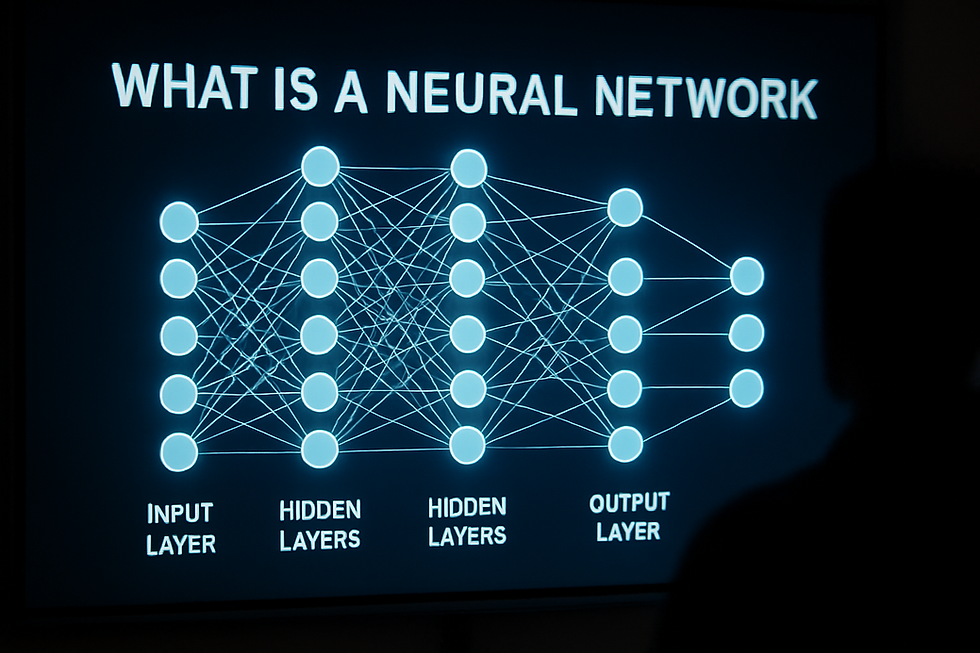
What is Adversarial Autoencoders (AAEs)

Imagine a machine that learns to paint like Picasso by studying thousands of paintings, then creates entirely new artwork that captures the master's style but shows scenes never painted before. That power—to learn patterns and generate new, meaningful content—sits at the heart of adversarial autoencoders. These models changed how computers understand and create data, from discovering life-saving drugs to detecting hidden flaws in manufacturing.
Don’t Just Read About AI — Own It. Right Here
TL;DR
Adversarial Autoencoders (AAEs) merge standard autoencoders with adversarial training to create powerful generative models
Introduced in November 2015 by Alireza Makhzani and colleagues at University of Toronto, Google Brain, and OpenAI
AAEs excel at semi-supervised learning, drug discovery, anomaly detection, and dimensionality reduction
Successfully tested in vitro for generating novel drug inhibitors for diseases like rheumatoid arthritis and psoriasis
Multi-adversarial autoencoders (MAAE) introduced in 2024 improve stability and training speed with multiple discriminators
Training involves two alternating phases: reconstruction (autoencoder) and regularization (adversarial network)
Adversarial Autoencoders (AAEs) are probabilistic autoencoders that use generative adversarial networks to match the latent code distribution with an arbitrary prior distribution. They combine an encoder-decoder architecture with a discriminator network, training through alternating reconstruction and adversarial phases to generate realistic data while ensuring the latent space follows a desired distribution.
Table of Contents
Understanding the Foundations
Before diving into adversarial autoencoders, you need to grasp two fundamental concepts: autoencoders and adversarial training.
What Are Autoencoders?
Autoencoders are neural networks that learn to compress data into a smaller representation (encoding) and then reconstruct the original input from this compressed form (decoding). Think of them as intelligent compression algorithms that capture the essence of your data.
A standard autoencoder has two parts:
Encoder: Compresses input into a latent representation
Decoder: Reconstructs the original input from the latent code
The network learns by minimizing reconstruction error—the difference between input and output.
The Problem with Traditional Autoencoders
Traditional autoencoders suffer from a critical weakness: their latent space often contains "holes"—regions that don't map to meaningful data. If you randomly sample from these holes and feed them to the decoder, you get garbage output.
This limitation makes traditional autoencoders poor generative models. They can compress and reconstruct, but they struggle to generate entirely new, realistic samples.
Enter Adversarial Training
Adversarial training, introduced through Generative Adversarial Networks (GANs) by Ian Goodfellow and colleagues in 2014, provides a solution. GANs use two competing networks:
A generator creates fake samples
A discriminator tries to distinguish real from fake samples
This competition drives both networks to improve, ultimately producing highly realistic generated data.
The Birth of Adversarial Autoencoders
In November 2015, Alireza Makhzani, Jonathon Shlens, Navdeep Jaitly, and Ian Goodfellow introduced Adversarial Autoencoders to solve the latent space problem. AAEs use adversarial training to force the encoder's latent distribution to match a chosen prior distribution (typically Gaussian).
This elegant combination ensures that:
The autoencoder learns meaningful representations
The latent space has no holes
Any point sampled from the prior maps to realistic output
How Adversarial Autoencoders Work
AAEs operate through a clever two-phase training process that alternates between reconstruction and regularization.
The Core Concept
AAEs match the aggregated posterior of the hidden code vector with an arbitrary prior distribution, ensuring that generating from any part of prior space results in meaningful samples. The encoder serves double duty: it compresses data for the autoencoder AND acts as the generator for the adversarial network.
Phase 1: Reconstruction
In this phase, the AAE behaves like a standard autoencoder:
Input data passes through the encoder
The encoder produces a latent representation
The decoder reconstructs the input from this representation
The network minimizes reconstruction loss (typically mean squared error)
This phase ensures the model learns to capture important features in the data.
Phase 2: Regularization (Adversarial Training)
Here the adversarial magic happens:
The discriminator receives two types of inputs:
Real samples from the prior distribution (e.g., Gaussian noise)
Fake samples from the encoder's output
The discriminator learns to tell them apart
The encoder learns to fool the discriminator
This phase forces the latent space to follow the desired prior distribution.
Why This Matters
By enforcing a specific prior distribution, AAEs ensure:
No dead zones: Every point in the latent space maps to something meaningful
Smooth interpolation: Moving between points produces gradual, sensible changes
Controllable generation: You can sample from the prior to generate new data
The Architecture Deep Dive
Let's examine each component of an AAE architecture.
Component 1: The Encoder
The encoder compresses input data into a latent space representation, transforming input into a compact representation. For image data, this typically uses convolutional layers. For sequential data, recurrent or attention-based layers work better.
The encoder learns to extract the most important features needed for both reconstruction and maintaining the prior distribution.
Component 2: The Decoder
The decoder mirrors the encoder's structure in reverse. It takes the latent code and reconstructs the original input. The decoder learns a deep generative model that maps the imposed prior to the data distribution.
Component 3: The Discriminator
The discriminator is a neural network that attempts to distinguish between latent codes produced by the encoder and samples from the prior distribution. It's typically a simple feedforward network with a few hidden layers ending in a single output neuron (for binary classification).
The discriminator provides the adversarial signal that shapes the encoder's behavior.
Layer Configurations
For molecular fingerprint generation, researchers developed a 7-layer AAE architecture with the latent middle layer serving as a discriminator. The specific architecture depends heavily on your data type and task requirements.
For images, typical architectures use:
Encoder: Multiple convolutional layers with batch normalization and ReLU activation
Decoder: Transposed convolutions (sometimes called deconvolutions)
Discriminator: 2-3 fully connected layers
Training Process and Optimization
Training an AAE requires careful orchestration of multiple objectives.
Loss Functions
AAEs optimize two main objectives:
Reconstruction Loss: Measures how well the decoder reconstructs inputs. Common choices include:
Mean Squared Error (MSE) for continuous data
Binary Cross-Entropy for binary data
Adversarial Loss: Standard GAN loss for the discriminator and encoder.
The total loss balances these objectives, often weighted by hyperparameters.
Training Algorithm
The training process alternates between updating different components:
Update autoencoder (encoder + decoder):
Sample a mini-batch of real data
Pass through encoder and decoder
Compute reconstruction loss
Backpropagate and update encoder and decoder weights
Update discriminator:
Sample real data and encode it
Sample from the prior distribution
Train discriminator to classify real vs fake
Update discriminator weights
Update encoder (adversarial):
Sample real data and encode it
Train encoder to fool the discriminator
Update encoder weights
Hyperparameter Considerations
Critical hyperparameters include:
Learning rates (often different for autoencoder vs discriminator)
Batch size
Latent space dimensionality
Number of discriminator updates per generator update
Weight decay and dropout rates
The adversarial training process can be unstable, requiring careful tuning of hyperparameters.
Convergence Challenges
Like GANs, AAEs can suffer from:
Mode collapse: Encoder produces limited variety in latent codes
Oscillation: Training alternates without converging
Vanishing gradients: Discriminator becomes too strong, providing no learning signal
Recent improvements address these issues through techniques like spectral normalization, gradient penalties, and careful learning rate scheduling.
AAEs vs VAEs vs GANs
Understanding how AAEs compare to related approaches helps you choose the right tool.
Variational Autoencoders (VAEs)
VAEs, first introduced by Diederik Kingma and Max Welling in 2013, also regularize the latent space using probabilistic principles.
Key Differences:
VAEs use KL divergence to match the prior; AAEs use adversarial training
AAEs can impose arbitrary prior distributions while VAEs typically use Gaussian priors
On MNIST with 100 and 1000 labels, AAEs significantly outperformed VAEs in semi-supervised settings
VAEs optimize a tractable lower bound; AAEs use implicit distribution matching
When to Choose VAEs:
You need probabilistic interpretations
Training stability is critical
You prefer simpler mathematics
When to Choose AAEs:
You want flexible prior distributions
Semi-supervised learning is your goal
Better performance matters more than interpretability
Generative Adversarial Networks (GANs)
GANs, introduced by Ian Goodfellow in 2014, consist of a generator and discriminator playing a minimax game.
Key Differences:
GANs excel at generating sharp, high-quality, realistic samples
AAEs provide an encoder for inference; standard GANs don't
GANs are less stable and more difficult to train than AAEs
AAEs combine generative and compression capabilities
When to Choose GANs:
Image quality is paramount
You only need generation (not encoding)
You have resources for extensive hyperparameter tuning
When to Choose AAEs:
You need both encoding and generation
Semi-supervised learning applications
More stable training is preferred
Performance Comparison
GANs typically produce sharper, more realistic images than VAEs, while VAEs provide better coverage of the data distribution. AAEs offer a middle ground—better image quality than VAEs with more stable training than GANs.
According to Coursera's analysis from May 2025, GANs are better for generating multimedia like images and videos, while VAEs excel at signal analysis and anomaly detection.
Hybrid Approaches
VAE-GANs combine VAE's ability to generate meaningful data representations with GAN's talent for producing high-quality, realistic images. These hybrids demonstrate the complementary nature of these techniques.
Real-World Applications
AAEs solve practical problems across multiple industries. Let's explore their most impactful applications.
1. Drug Discovery and Molecular Design
AAEs accelerate drug discovery by generating novel molecular structures with desired properties, accomplishing in hours what traditional pipelines require months to achieve.
The process works like this:
Train the AAE on molecular fingerprints with known properties
Use the latent space to represent molecular features
Generate new molecules by sampling and decoding
Filter candidates based on predicted properties
The AAE model significantly enhances capacity and efficiency in developing new molecules with specific anticancer properties.
2. Semi-Supervised Classification
AAEs can be used for semi-supervised classification, disentangling style and content of images, and unsupervised clustering. This makes them valuable when labeled data is scarce.
The semi-supervised AAE architecture separates:
Class label information (supervised component)
Style/content information (unsupervised component)
All AAE models train end-to-end, whereas semi-supervised VAE models must be trained one layer at a time. This end-to-end training provides both practical and performance advantages.
3. Anomaly Detection
AAE-based anomaly detection frameworks capture the normality distribution of high-dimensional images and identify abnormalities in industrial settings.
The approach leverages AAEs' ability to learn normal data patterns. Anomalies produce high reconstruction errors because they deviate from learned patterns.
Applications include:
Manufacturing defect detection
Financial fraud detection
Infrastructure monitoring
Cybersecurity threat detection
4. Dimensionality Reduction and Visualization
AAEs compress high-dimensional data into lower-dimensional representations while preserving important structure. This enables:
Data visualization in 2D or 3D
Feature extraction for downstream tasks
Data compression for storage or transmission
AAEs learn manifolds that exhibit sharp transitions, indicating the coding space is filled with no "holes," unlike VAEs which show gaps in coverage.
5. Time Series Generation
The AVATAR framework, introduced in January 2025, combines AAEs with autoregressive learning for time series generation. This addresses unique challenges in temporal data:
Maintaining temporal dependencies
Capturing conditional distributions at each time step
Generating realistic sequential patterns
Applications include financial forecasting, sensor data augmentation, and synthetic time series for testing.
6. Image Generation and Editing
AAEs generate realistic images and enable controlled editing by manipulating latent codes. You can:
Generate faces with specific attributes
Interpolate between images smoothly
Edit specific features while preserving others
7. Medical Imaging
AAEs generate molecular structures that could induce desired gene expression changes, validated on the LINCS L1000 dataset. This enables:
Drug response prediction
Personalized medicine applications
Understanding drug-gene interactions
Case Study 1: Drug Discovery at Insilico Medicine
Background: Insilico Medicine applied deep adversarial autoencoders for generating novel molecular fingerprints with defined parameters for anticancer therapy.
The Challenge: Traditional drug discovery is slow, expensive, and has high failure rates. Identifying promising drug candidates requires screening millions of compounds, most of which prove ineffective.
The AAE Solution: Researchers developed a 7-layer AAE architecture with the latent middle layer serving as a discriminator, using binary fingerprints and molecular concentration as input/output.
Implementation Details:
Trained on NCI-60 cell line assay data for 6,252 compounds profiled on the MCF-7 cell line
Introduced a neuron in the latent layer for growth inhibition percentage
Negative values indicated reduction in tumor cells after treatment
Results: The AAE output screened 72 million compounds in PubChem and selected candidate molecules with potential anti-cancer properties.
Real-World Impact: The team proposed an entangled conditional adversarial autoencoder that generates molecular structures based on properties like activity against specific proteins, solubility, and ease of synthesis. A molecule generated for Janus kinase 3 inhibition was tested in vitro and showed good activity and selectivity.
This case demonstrates AAEs' ability to:
Learn complex molecular patterns
Generate novel, chemically valid structures
Predict biological activity
Accelerate drug discovery timelines from months to hours
Publication Date: December 2016 in Oncotarget
Case Study 2: Semiconductor Defect Detection
Background: A company used Adversarial Autoencoders with Deep Support Vector Data Description (DSVDD) prior for one-class classification on wafer maps in semiconductor manufacturing.
The Challenge: Semiconductor manufacturers face quality control challenges:
Defects are rare (highly imbalanced data)
Defect patterns constantly evolve
Manual inspection is slow and inconsistent
False alarms are costly
The AAE Solution: The proposed method performs one-class classification on wafer maps, learning normal patterns and flagging deviations as defects.
Why AAEs Work Here:
Semi-supervised approach works with limited defect examples
Learns complex spatial patterns in wafer maps
Adapts to new defect types without retraining from scratch
Provides explainable defect localization
Results: The method helps manufacturers identify defects and improve yield rates.
Industry Impact: Semiconductor companies report:
Reduced manual inspection time
Earlier defect detection
Higher yield rates
Faster response to process variations
This application showcases AAEs' strength in:
Handling imbalanced datasets
Learning from normal data only
Detecting novel anomalies
Operating in high-stakes manufacturing environments
Case Study 3: Medical Image Analysis
Background: Researchers applied AAEs to high-content image generation for drug discovery using cellular imaging data.
The Challenge: High-content image-based drug discovery screens generate immense amounts of data requiring automated analysis, but face challenges due to data requirements and limited preclinical investigation data.
The AAE Approach: While the study primarily used DCGANs, researchers explored adversarial autoencoder architectures for generating lead molecules as an architectural variation in GAN design.
Applications:
Data Augmentation: Generate synthetic cellular images to supplement limited real data
Feature Extraction: Learn representations useful for drug response prediction
Quality Control: Identify imaging artifacts and anomalies
Technical Implementation:
Trained on high-content images of monocytes and bacteria
Used adversarial training to ensure generated images match real image distributions
Evaluated quality by comparing feature distributions
Results: The augmented dataset yielded better classification performance compared to using only real images, published in September 2020.
Research Impact: This work demonstrates how AAEs and related architectures:
Overcome data scarcity in medical research
Maintain biological realism in synthetic data
Enable better model training with limited samples
Accelerate drug screening workflows
Advantages and Limitations
Understanding AAEs' strengths and weaknesses helps you deploy them effectively.
Advantages
1. Flexible Prior Distributions AAEs can impose arbitrary prior distributions on the latent space, not just Gaussian priors. This flexibility enables:
Mixture of Gaussians for multi-modal data
Categorical distributions for discrete attributes
Custom priors matching domain knowledge
2. End-to-End Training All AAE models train end-to-end, whereas semi-supervised VAE models must be trained layer-by-layer. This simplifies implementation and often improves performance.
3. Better Latent Space Structure By imposing a prior on the latent space, AAEs ensure encoded representations are well-structured and meaningful. No dead zones means reliable generation.
4. Semi-Supervised Learning Excellence On MNIST with 100 and 1000 labels, AAEs significantly outperformed VAEs in semi-supervised classification.
5. Stable Generation Unlike GANs, AAEs provide:
Explicit encoding of data points
Inference capabilities
More stable training dynamics
6. Interpretable Latent Space The structured latent space enables:
Smooth interpolation between samples
Controlled attribute manipulation
Meaningful clustering
Limitations
1. Training Instability The adversarial training process can be unstable, requiring careful tuning of hyperparameters and sensitive to training configuration.
2. Computational Complexity Implementing and training AAEs is more complex than traditional autoencoders, necessitating deeper understanding of both autoencoders and adversarial networks.
3. Hyperparameter Sensitivity AAEs require tuning:
Learning rates for three components
Balance between reconstruction and adversarial losses
Network architectures for each component
Training schedule and update frequencies
4. Mode Collapse Risk While less prone than GANs, AAEs can still experience mode collapse where the encoder produces limited variety.
5. Image Quality Trade-offs GANs typically generate sharper, higher-quality samples than AAEs, though AAEs offer better stability and inference capabilities.
6. Black Box Nature Like all deep learning models, AAEs lack full interpretability, making it hard to understand why specific latent codes produce certain outputs.
Recent Innovations and Research
The field continues evolving with exciting developments.
Multi-Adversarial Autoencoders (MAAE)
In October 2024, researchers published Multi-adversarial Autoencoder (MAAE) in Expert Systems with Applications, extending the AAE framework by incorporating multiple discriminators and enabling soft-ensemble feedback.
Key Innovations:
Multiple discriminators provide richer feedback signals
Learnable parameter dynamically balances mutual information and inference quality
Adaptive adjustment optimizes representation richness and task performance
MAAE demonstrates improved stability and faster convergence while extracting meaningful features, with extensive experiments on MNIST, CIFAR10, and CelebA showing superior results.
AVATAR for Time Series
The AVATAR framework, introduced in January 2025 on arXiv, combines AAEs with autoregressive learning for time series generation.
Novel Components:
Integration of autoencoder with supervisor network
Supervised loss for learning temporal dynamics
Distribution loss for aligning latent representation with Gaussian prior
Joint training mechanism with combined loss
Experiments demonstrate significant improvements in both quality and practical utility of generated time series data across various datasets with diverse characteristics.
Spectral Constraint AAEs
Researchers developed spectral constraint adversarial autoencoders for hyperspectral anomaly detection, published in 2019. This incorporates spectral angle distance into the AAE loss function to enforce spectral consistency in hyperspectral images.
Applications in Sports Science
A December 2024 study in Sensors-Basel explored AAEs for assessing and visualizing fatigue in athletes through two-dimensional latent space representation. The research used AAEs for:
Human activity recognition
Dimensionality reduction of movement data
Fatigue pattern identification
Semi-supervised and conditional approaches
Implementation Considerations
Successfully deploying AAEs requires attention to several practical factors.
Choosing the Right Architecture
For Image Data:
Use convolutional layers in encoder/decoder
Consider residual connections for deeper networks
Add batch normalization for stability
For Sequential Data:
RNN or LSTM layers for temporal dependencies
Attention mechanisms for long sequences
Causal convolutions as lightweight alternative
For Tabular Data:
Fully connected layers with dropout
Embedding layers for categorical features
Careful normalization of inputs
Latent Space Dimensionality
The latent space dimension should match the intrinsic dimensionality of the data—5 to 8 dimensions for MNIST according to Makhzani et al. 2015.
Too low: Information loss, poor reconstruction Too high: Overfitting, computational waste Just right: Meaningful representation, good generalization
Training Best Practices
Start Simple:
Train basic autoencoder first
Add adversarial component gradually
Tune one hyperparameter at a time
Monitor Multiple Metrics:
Reconstruction loss
Discriminator accuracy (should stay around 50-60%)
Generated sample quality
Latent space distribution matching
Use Learning Rate Schedules:
Often decrease learning rate over time
Consider separate schedules for different components
Watch for signs of instability
Regularization Techniques:
Dropout in encoder/decoder
Weight decay
Gradient clipping
Spectral normalization on discriminator
Data Preprocessing
Critical steps include:
Normalization (typically to [-1, 1] or [0, 1])
Data augmentation for small datasets
Handling missing values appropriately
Balancing classes in semi-supervised scenarios
Computational Resources
Training AAEs requires:
GPU for reasonable training times
Memory for storing three networks
Storage for checkpoints and generated samples
Consider:
Starting with smaller models on subset of data
Using mixed precision training to save memory
Distributing training across multiple GPUs if available
Industry Adoption and Market Outlook
The generative AI market, including technologies like AAEs, experiences explosive growth.
Market Size and Growth
The global generative AI market was forecast to increase between 2024 and 2030 by 320 billion U.S. dollars (+887.41%), reaching 356.05 billion dollars by 2030 according to Statista data from April 2024.
The global generative AI market size was valued at USD 16.87 billion in 2024 and is projected to reach USD 109.37 billion by 2030, growing at a CAGR of 37.6% from 2025 to 2030.
Technology Adoption
By technology segment, the generative AI market includes Transformers, Generative Adversarial Networks (GANs), Variational Autoencoders (VAEs), and Diffusion Networks, with data showing year-over-year growth for VAEs at 9.5% from 2024-2029.
From nearly $15.01 billion in 2023, the generative AI market grew to $23.1 billion in 2024, projected to reach $90.61 billion by 2028 at a CAGR of 43.28%, according to The Business Research Company report from July 2024.
Regional Distribution
In global comparison, the United States represents the largest market size at $27.51 billion in 2025.
North America dominated the generative AI market with a 40.8% share in 2024, driven by leading companies researching and developing generative AI applications.
Industry Applications
Key sectors adopting AAEs and related generative models include:
Healthcare and Life Sciences:
Drug discovery pipelines
Medical image analysis
Personalized medicine
Biomarker development
Manufacturing:
Quality control and defect detection
Predictive maintenance
Process optimization
Synthetic data generation for testing
Financial Services:
Fraud detection systems
Risk modeling
Algorithmic trading
Anomaly detection in transactions
Research and Development:
Materials science
Molecular design
Synthetic data for AI training
Simulation and modeling
Investment Trends
Codeium, specializing in generative AI-powered coding tools, secured $65 million in Series B funding in January 2024, led by Kleiner Perkins. This investment supports advancement of code-biased Large Language Models and demonstrates continued investor confidence in generative AI technologies.
Common Pitfalls and How to Avoid Them
Learn from others' mistakes to deploy AAEs successfully.
Pitfall 1: Imbalanced Loss Weights
Problem: Reconstruction loss dominates, discriminator barely trains, or vice versa.
Solution:
Start with equal weights
Monitor both losses during training
Adjust if one component stops improving
Use validation metrics to guide tuning
Pitfall 2: Wrong Prior Distribution
Problem: Chosen prior doesn't match data characteristics.
Solution:
Analyze your data's natural structure
Use Gaussian for continuous, unimodal data
Consider mixture of Gaussians for multi-modal data
Match prior complexity to data complexity
Pitfall 3: Discriminator Too Strong
Problem: Discriminator perfectly separates real/fake, encoder receives no gradient signal.
Solution:
Update discriminator less frequently than encoder
Use label smoothing (0.9 instead of 1.0 for real labels)
Add noise to discriminator inputs
Use spectral normalization
Pitfall 4: Insufficient Latent Dimensions
Problem: Latent space too small, information bottleneck causes poor reconstruction.
Solution:
Start with higher dimensions, gradually reduce
Monitor reconstruction quality
Visualize latent space to check for crowding
Balance compression with information preservation
Pitfall 5: Poor Data Preprocessing
Problem: Unnormalized or improperly scaled data causes training instability.
Solution:
Normalize inputs to consistent range
Handle outliers appropriately
Ensure consistent preprocessing in training and inference
Document preprocessing steps
Pitfall 6: Ignoring Mode Collapse
Problem: Encoder maps many inputs to same latent code, decoder generates limited variety.
Solution:
Monitor diversity metrics on generated samples
Use minibatch discrimination
Try different prior distributions
Ensure sufficient model capacity
Pitfall 7: Overfitting to Training Data
Problem: Model memorizes training examples rather than learning generalizable patterns.
Solution:
Use validation set to monitor generalization
Add regularization (dropout, weight decay)
Generate samples not in training set
Consider data augmentation
Future Directions
Several exciting research directions promise to advance AAE capabilities.
Enhanced Stability and Convergence
Researchers work on:
Better training algorithms that reduce oscillation
Adaptive learning rate schedules specific to AAEs
Theoretical understanding of convergence properties
Novel regularization techniques
Conditional Generation
Extending AAEs with conditional capabilities enables:
Generating samples with specific attributes
Controlled editing of existing samples
Multi-modal generation
Fine-grained attribute manipulation
Larger-Scale Applications
As computational resources grow:
AAEs on higher-resolution images
Longer sequence modeling
Multi-modal data (combining text, image, audio)
Real-time applications
Integration with Other Techniques
Hybrid approaches combining AAEs with:
Attention mechanisms
Transformer architectures
Diffusion models
Neural architecture search
Explainability and Interpretability
Making AAEs more interpretable through:
Disentangled representations
Causal understanding of latent factors
Visualization techniques
Theoretical foundations
Domain-Specific Architectures
Specialized AAEs for:
3D data (point clouds, meshes)
Graph-structured data
Scientific domains (protein folding, material design)
Edge computing and mobile devices
FAQ
1. What's the main difference between AAEs and VAEs?
AAEs use adversarial training to match the latent distribution to a prior, while VAEs use KL divergence. AAEs can impose arbitrary prior distributions and significantly outperformed VAEs on MNIST semi-supervised tasks with 100 and 1000 labels. AAEs also train end-to-end rather than layer-by-layer.
2. Can AAEs generate higher quality images than VAEs?
Generally yes. AAE models learn manifolds with sharp transitions indicating filled coding space with no "holes," while VAEs exhibit systematic differences and gaps in coverage. However, GANs still produce sharper, higher-quality samples than both AAEs and VAEs.
3. How much training data do I need for an AAE?
It depends on your task complexity. For semi-supervised learning, AAEs excel with limited labeled data. The original AAE paper demonstrated competitive results on MNIST (60,000 training images), Street View House Numbers, and Toronto Face datasets. Start with thousands of samples and scale up as needed.
4. What programming frameworks support AAE implementation?
AAEs can be implemented in:
PyTorch (most popular currently)
TensorFlow/Keras
JAX
Theano (older implementations)
Most modern implementations use PyTorch for flexibility and ease of debugging.
5. Are AAEs suitable for production applications?
Yes, but with caveats. AAEs have been successfully tested in vitro for drug discovery applications, and deployed in semiconductor manufacturing for defect detection. However, training instability and hyperparameter sensitivity require careful engineering for production deployment.
6. How do I choose between AAE, VAE, and GAN?
Choose based on your priorities:
AAE: Need both encoding and generation, semi-supervised learning, balance between stability and quality
VAE: Need theoretical guarantees, probabilistic interpretation, simplicity
GAN: Pure generation, highest image quality, have resources for extensive tuning
7. Can AAEs work with small datasets?
Yes, especially for semi-supervised scenarios. AAEs can leverage both labeled and unlabeled data effectively. Techniques like data augmentation, transfer learning, and careful regularization help when data is limited.
8. What's the typical training time for an AAE?
Highly variable based on:
Dataset size and complexity
Model architecture
Hardware (GPU vs CPU)
Desired quality
On a modern GPU, expect:
Simple datasets (MNIST): Minutes to hours
Complex datasets (high-res images): Hours to days
Large-scale applications: Days to weeks
9. How do I debug AAE training problems?
Key debugging steps:
Train autoencoder alone first (should reconstruct well)
Add adversarial component gradually
Monitor discriminator accuracy (target 50-60%)
Visualize generated samples frequently
Check latent space distribution matches prior
Use smaller models for faster iteration
10. Are there pre-trained AAE models available?
Pre-trained AAEs are less common than for VAEs or GANs. Most applications require training on domain-specific data. However, you can find:
Research code with trained checkpoints
Transfer learning from related architectures
Community implementations on GitHub
11. Can AAEs handle multi-modal data?
Yes, with appropriate architecture modifications. Researchers have developed AAEs for:
Images with labels
Text and images together
Audio and visual data
Multiple sensor modalities
The key is designing encoders/decoders that handle each modality appropriately.
12. What causes mode collapse in AAEs and how do I fix it?
Mode collapse occurs when the encoder maps diverse inputs to similar latent codes. AAEs are less prone to mode collapse than GANs, but it can still happen. Solutions include:
Increase encoder capacity
Use minibatch discrimination
Add regularization to encourage diversity
Try different prior distributions
Monitor generated sample diversity
13. How important is the choice of prior distribution?
Very important. AAEs' ability to impose arbitrary prior distributions is a key advantage over VAEs. Match your prior to data characteristics:
Gaussian for continuous, unimodal data
Mixture of Gaussians for clustered data
Categorical for discrete attributes
Custom priors encoding domain knowledge
14. Can I use AAEs for real-time applications?
Once trained, AAEs can perform inference quickly:
Encoding: Fast (single forward pass)
Decoding: Fast (single forward pass)
Generation: Fast (sample prior, decode)
Real-time deployment is feasible with proper optimization (model pruning, quantization, efficient implementations).
15. What's the state-of-the-art performance for AAEs?
Multi-adversarial Autoencoders (MAAE) from October 2024 demonstrate improved stability and faster convergence with extensive experiments on MNIST, CIFAR10, and CelebA showing superior results. AVATAR framework from January 2025 shows significant improvements in time series generation quality and utility.
Key Takeaways
Adversarial Autoencoders combine autoencoders' compression capabilities with adversarial training's generative power to create robust generative models
Introduced by Alireza Makhzani and colleagues in November 2015, AAEs have matured into production-ready technology
Training involves two alternating phases: reconstruction (autoencoder) and regularization (adversarial matching)
AAEs significantly outperform VAEs in semi-supervised learning tasks and can impose arbitrary prior distributions
Real-world applications span drug discovery, anomaly detection, image generation, and time series forecasting
Successfully tested in vitro for generating novel drug candidates with good activity and selectivity
The generative AI market grows rapidly, projected to reach hundreds of billions of dollars by 2030
Recent innovations like MAAE (2024) and AVATAR (2025) improve stability, speed, and application scope
Implementation requires careful hyperparameter tuning, appropriate architecture design, and monitoring for training stability
AAEs offer better stability than GANs while maintaining superior performance compared to VAEs in many tasks
Actionable Next Steps
Start with the Basics: Implement a simple AAE on MNIST using PyTorch or TensorFlow to understand the training dynamics
Study the Original Paper: Read "Adversarial Autoencoders" by Makhzani et al. (2015) available on arXiv for theoretical foundations
Explore GitHub Implementations: Find community code examples and pre-trained models to accelerate your learning
Experiment with Hyperparameters: Test different learning rates, batch sizes, and loss weights on your chosen dataset
Monitor Training Carefully: Set up logging and visualization to track reconstruction loss, discriminator accuracy, and sample quality
Consider Your Application: Determine if AAEs fit your needs better than VAEs or GANs based on requirements for encoding, generation quality, and training stability
Start Simple, Scale Gradually: Begin with small models and datasets, then increase complexity as you understand the dynamics
Join the Community: Participate in forums, read recent papers, and contribute to open-source implementations
Explore Recent Innovations: Investigate MAAE and AVATAR frameworks for state-of-the-art techniques
Apply to Real Problems: Once comfortable, tackle domain-specific challenges in your field of interest
Glossary
Adversarial Training: A training method where two neural networks compete against each other, one generating samples and the other trying to distinguish real from generated samples.
Aggregated Posterior: The distribution of latent codes produced by encoding many data points through the encoder network.
Autoencoder: A neural network that learns to compress data into a latent representation and reconstruct the original input from this compressed form.
Convolutional Neural Network (CNN): A type of neural network especially effective for processing grid-like data such as images, using convolutional layers.
Decoder: The component of an autoencoder that reconstructs the original input from the latent representation.
Discriminator: A neural network that attempts to distinguish between real samples and generated samples in adversarial training.
Encoder: The component of an autoencoder that compresses input data into a latent representation.
Generative Adversarial Network (GAN): A framework where a generator network creates fake samples and a discriminator network tries to identify them, training both through competition.
Hyperparameter: A configuration setting for the model that is set before training (like learning rate, batch size) rather than learned from data.
Latent Space: The compressed, lower-dimensional representation learned by the encoder, capturing important features of the data.
Loss Function: A mathematical function that measures how far the model's predictions are from the desired output, used to guide training.
Mode Collapse: A failure mode in generative models where the generator produces limited variety in its outputs.
Prior Distribution: A probability distribution (often Gaussian) that we want the latent space to follow, enabling controlled sampling for generation.
Reconstruction Loss: The difference between the original input and the autoencoder's reconstructed output, measuring reconstruction quality.
Regularization: Techniques that prevent overfitting and encourage the model to learn generalizable patterns rather than memorizing training data.
Semi-Supervised Learning: Machine learning that uses both labeled and unlabeled data, leveraging abundant unlabeled data with limited labels.
Stochastic Gradient Descent (SGD): An optimization algorithm that updates model parameters using gradients computed on small batches of data.
Variational Autoencoder (VAE): A type of autoencoder that uses probabilistic encoding and KL divergence to regularize the latent space.
Sources & References
Makhzani, A., Shlens, J., Jaitly, N., & Goodfellow, I. (2015). Adversarial Autoencoders. arXiv preprint arXiv:1511.05644. https://arxiv.org/abs/1511.05644
Wu, X., & Jang, H. (2024). Multi-adversarial autoencoders: Stable, faster and self-adaptive representation learning. Expert Systems with Applications, 262, 125554. https://www.sciencedirect.com/science/article/abs/pii/S0957417424024217
Eskandari Nasab, M. R., Hamdi, S. M., & Filali Boubrahimi, S. (2025). AVATAR: Adversarial Autoencoders with Autoregressive Refinement for Time Series Generation. arXiv preprint arXiv:2501.01649. https://arxiv.org/abs/2501.01649
Kadurin, A., Aliper, A., Kazennov, A., Mamoshina, P., Vanhaelen, Q., Khrabrov, K., & Zhavoronkov, A. (2017). The cornucopia of meaningful leads: Applying deep adversarial autoencoders for new molecule development in oncology. Oncotarget, 8(7), 10883-10890. https://www.oncotarget.com/article/14073/text/
Polykovskiy, D., Zhebrak, A., Vetrov, D., Ivanenkov, Y., Aladinskiy, V., Bozdaganyan, M., Osipov, S., Kvetkova, D., Bezrukov, D., Aladinskaya, A., & Mamoshina, P. (2018). Entangled conditional adversarial autoencoder for de novo drug discovery. Molecular Pharmaceutics, 15(10), 4398-4405. https://pubs.acs.org/doi/10.1021/acs.molpharmaceut.8b00839
Kadurin, A., Nikolenko, S., Khrabrov, K., Aliper, A., & Zhavoronkov, A. (2017). druGAN: An Advanced Generative Adversarial Autoencoder Model for de Novo Generation of New Molecules with Desired Molecular Properties in Silico. Molecular Pharmaceutics, 14(9), 3098-3104. https://pubs.acs.org/doi/10.1021/acs.molpharmaceut.7b00346
Shayakhmetov, R., Kuznetsov, M., Zhebrak, A., Kadurin, A., Nikolenko, S., Aliper, A., & Polykovskiy, D. (2020). Molecular Generation for Desired Transcriptome Changes With Adversarial Autoencoders. Frontiers in Pharmacology, 11, 269. https://www.frontiersin.org/journals/pharmacology/articles/10.3389/fphar.2020.00269/full
Goodfellow, I., Pouget-Abadie, J., Mirza, M., Xu, B., Warde-Farley, D., Ozair, S., Courville, A., & Bengio, Y. (2014). Generative Adversarial Networks. Advances in Neural Information Processing Systems (NIPS), 27. https://arxiv.org/abs/1406.2661
Kingma, D. P., & Welling, M. (2013). Auto-Encoding Variational Bayes. arXiv preprint arXiv:1312.6114. https://arxiv.org/abs/1312.6114
GeeksforGeeks. (2025, July 23). Adversarial Auto Encoder (AAE). https://www.geeksforgeeks.org/artificial-intelligence/adversarial-auto-encoder-aae/
Rousseau, T., Venture, G., & Hernandez, V. (2024, December). Latent Space Representation of Human Movement: Assessing the Effects of Fatigue. Sensors-Basel. https://www.researchgate.net/figure/Project-Overview-The-adversarial-autoencoder-AAE-is-trained-by-considering-a_fig1_361349893
Statista. (2024, April 11). Generative artificial intelligence (AI) market size worldwide from 2020 to 2030. https://www.statista.com/forecasts/1449838/generative-ai-market-size-worldwide
Grand View Research. (2024). Generative AI Market Size, Share & Trends Analysis Report. https://www.grandviewresearch.com/industry-analysis/generative-ai-market-report
The Business Research Company. (2024, July 9). Generative AI Market to Grow 43% Annually from 2024 to 2028. https://blog.marketresearch.com/generative-ai-market-to-grow-43-annually-from-2024-to-2028
Technavio. (2024). Generative Artificial Intelligence (AI) Market Growth Analysis - Size and Forecast 2025-2029. https://www.technavio.com/report/generative-ai-market-analysis
TechTarget. (n.d.). GANs vs. VAEs: What is the best generative AI approach? https://www.techtarget.com/searchenterpriseai/feature/GANs-vs-VAEs-What-is-the-best-generative-AI-approach
Coursera. (2025, May 1). VAE vs. GAN: What's the Difference? https://www.coursera.org/articles/vae-vs-gan
Baeldung. (2024, March 18). VAE Vs. GAN For Image Generation. https://www.baeldung.com/cs/vae-vs-gan-image-generation
Generative AI Lab. (2024, August 19). Comparing Diffusion, GAN, and VAE Techniques. https://generativeailab.org/l/generative-ai/a-tale-of-three-generative-models-comparing-diffusion-gan-and-vae-techniques/569/
Activeloop. (n.d.). What is Adversarial Autoencoders? https://www.activeloop.ai/resources/glossary/adversarial-autoencoders-aae/