Cybersecurity Services: Types, Benefits, Costs & How to Choose the Right Provider

A SaaS company is two weeks from a major release when a prospective enterprise customer sends a security questionnaire. It asks for evidence of independent testing, a tested incident response process and monitoring coverage. The team has an antivirus license, multi-factor authentication on some accounts and a vendor brochure promising complete protection. Which of the dozens of cybersecurity services on offer does it need first, what should each realistically cost, and how can it tell a credible provider from a persuasive one? This guide answers those questions in plain language: what cybersecurity services are, how the main types differ, what they cost, how company size changes the answer, and how to compare providers before money is spent.
TL;DR
Think in jobs, not products. Services prevent, detect, respond, recover, advise or provide independent assurance. Most organizations need a blend, not a single purchase.
Fundamentals first. Asset inventory, multi-factor authentication, patching, tested backups and a basic incident plan usually outrank advanced services. See the cybersecurity for business overview for the baseline.
Match the service to the risk. A web app or API handling customer data calls for application-focused testing; a small team with no one watching alerts may need managed detection instead.
Compare scope, not headline price. Published prices use different units (per device, per user, per test, per year), so insist on a written statement of work.
Score providers before you sign. Use the 100-point scorecard below, ask for a sample report and named tester qualifications, and treat guarantees of total security as a red flag.
What Are Cybersecurity Services? (Quick Answer)
Cybersecurity services are professional offerings that help organizations prevent, detect, respond to and recover from cyber threats. They range from managed monitoring and vulnerability management to penetration testing, incident response, consulting and compliance support, and can be delivered as one-off projects, subscriptions or retainers by external providers or alongside internal security teams.
 Concerned About Your Application's Security? If you run a web application, API or SaaS product, a scoped and authorized security assessment can show how authentication, authorization and business logic hold up against real attack techniques. Articsledge scopes web application, API and SaaS assessments to your systems and agreed rules of engagement, with a written report and optional retesting. Pricing is quoted from scope rather than fixed in advance. |
Table of Contents
What Are Cybersecurity Services?
Cybersecurity services are the expertise, tooling and operational work an organization buys, rather than builds, to reduce the likelihood and impact of cyberattacks. A provider might watch your systems around the clock, test your web application the way an attacker would, help you answer a regulator, or lead the response when something goes wrong. The category is broad because the problem is broad: cybersecurity spans people, processes, software, infrastructure and data.
A practical way to sort the market is by the job a service does:
Preventive services reduce exposure before an incident: configuration hardening, patching programs, identity controls and secure development support.
Detective services spot suspicious activity, including security monitoring, threat detection and response and log analysis in a SIEM.
Responsive services contain and investigate incidents: incident response, digital forensics and crisis coordination.
Recovery services restore operations, such as backup, disaster recovery and business continuity planning.
Advisory services help you decide what to do: risk assessments, security roadmaps, architecture reviews and part-time security leadership.
Assurance services give independent evidence that controls exist and work, including penetration tests, audits and attestations.
These groups echo the NIST Cybersecurity Framework 2.0, which organizes security outcomes into Govern, Identify, Protect, Detect, Respond and Recover. The framework is not a shopping list, but it is a useful reminder that a security program needs more than prevention.
External providers versus internal security functions. Most organizations blend both. An internal team knows the business, owns risk decisions and handles daily operations. External providers add specialist skills that are expensive to hire full time, an independent perspective for testing and audits, and coverage hours a small team cannot staff. Outsourcing a task never outsources accountability: you still own your data, your customers and your risk decisions. A joint advisory from CISA and its international partners makes the same point about managed service providers, urging contracts that clearly identify who owns which security responsibilities.
In plain language: cybersecurity services are people and technology you contract to help protect, watch, test, repair and prove the security of your organization. The rest of this guide helps you decide which ones, in what order, and from whom.
Types of Cybersecurity Services
Security vendors use overlapping labels, so two proposals with the same name can cover very different work. The twelve groups below separate the main service types by purpose, typical buyer, deliverables and limits, and a comparison table follows them.
MSSP, Managed SOC, and Continuous Monitoring
A managed security service provider (MSSP) operates security tools and processes on your behalf, usually through a security operations center (SOC) that monitors alerts. Typical buyers are small and midsize organizations that cannot staff round-the-clock monitoring. Deliverables include alert triage, escalation, tuning and periodic reports. The main limitation is visibility: a provider can only analyze data it receives, and some MSSPs notify you of alerts without acting on them, so confirm who contains a threat.
MDR, EDR, and XDR
Endpoint detection and response (EDR) software records activity on laptops and servers and flags suspicious behavior. Extended detection and response (XDR) widens the view across email, identity, cloud and network data. Managed detection and response (MDR) adds a provider's analysts who investigate and, depending on the contract, take containment actions. Buyers want faster detection without building a SOC. The limits: agents must be deployed on every device, permitted response actions vary, and none of this tests your application logic. See endpoint protection for the tooling side.
Vulnerability Assessment and Ongoing Vulnerability Management
A vulnerability assessment finds and ranks known weaknesses, usually with automated scanners plus analyst review; ongoing vulnerability management repeats the cycle and tracks fixes. Any organization with internet-facing systems benefits, and the stakes are high: Verizon's 2026 Data Breach Investigations Report found vulnerability exploitation was the initial access route in 31% of breaches analyzed, ahead of stolen credentials. The limits are false positives, blind spots for business-logic flaws and point-in-time results. Scanning and patching also cannot stop every zero-day: in 2023 the CL0P group exploited an unknown SQL injection flaw in MOVEit Transfer, as a CISA and FBI advisory of June 7, 2023 documented.
Penetration Testing, Red Teaming, and Application and API Security Assessments
A penetration test is an authorized, time-boxed attempt by skilled testers to exploit weaknesses and show what an attacker could actually reach. Unlike a scan, it relies on manual judgment, chains small issues into larger ones and reports evidence. Red teaming is broader and goal-based: it simulates a determined adversary against people, processes and detection capability, and suits mature organizations that already test regularly.
Application and API security assessments focus on web applications, APIs and SaaS platforms: login and session handling, role-based access, tenant separation, input handling and business logic. The weaknesses are well documented. The OWASP Top 10:2025 ranks Broken Access Control first, and the OWASP API Security Top 10 (2023) leads with Broken Object Level Authorization. Regulators in Australia have alleged that an internet-facing API with an access-control coding error exposed Optus customer data in 2022; those allegations are unproven and the company has said it intends to defend them.
Typical buyers are SaaS companies, firms with customer portals and teams facing customer security reviews. Expect scoped objectives, written authorization, evidence-backed findings, remediation guidance and often a retest. The limits are real: results describe a point in time and the agreed scope, and the NCSC cautions that a penetration test is not a magic bullet and that tester quality matters. For a deeper walkthrough, see Articsledge's guide to penetration testing services.
Network, Endpoint, and Cloud Security
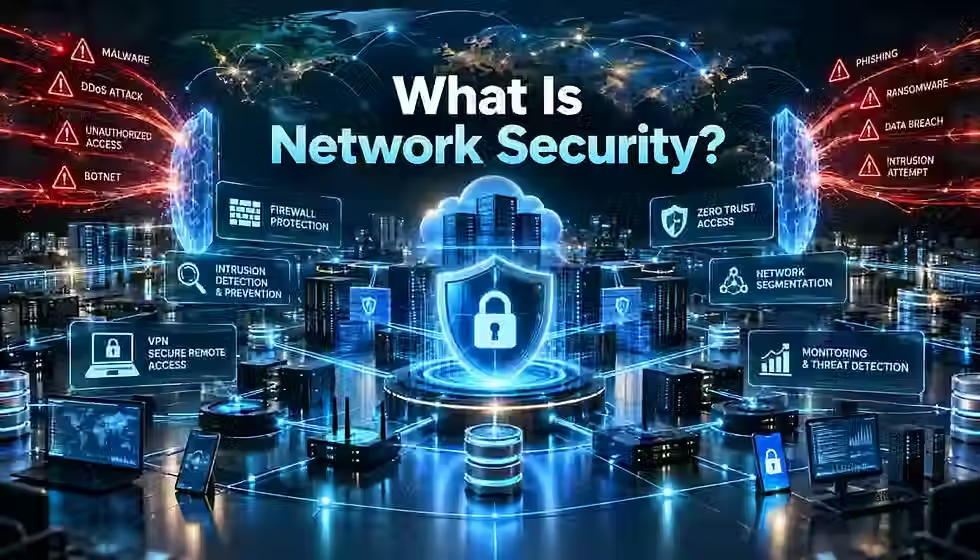
Network security services cover firewalls, segmentation, remote access and traffic monitoring; endpoint services protect devices; cloud security services review configuration, identity permissions and data exposure on platforms such as AWS, Azure and Google Cloud. Buyers are usually organizations with hybrid or cloud-first infrastructure, and deliverables include configuration reviews, hardening plans and managed rule sets. Remember shared responsibility: the cloud vendor secures the platform, while you secure your configuration, identities and data.
IAM, MFA, Identity Governance, and Zero Trust
Identity and access management (IAM) controls who can reach what. Services include multi-factor authentication (MFA) rollout, single sign-on, privileged access management, access reviews and identity governance. Zero trust applies the principle of never granting trust on network location alone. Identity matters because attackers log in rather than break in: UnitedHealth's CEO told Congress that the 2024 Change Healthcare attack began on February 12 with compromised credentials on a remote access portal lacking MFA. Identity projects cross every team and stall without clear owners, and zero trust is a direction, not a product you can buy finished.
Incident Response, Digital Forensics, and Readiness Retainers
Incident response (IR) services contain, investigate and recover from an active incident, while digital forensics preserves evidence for legal, insurance and regulatory needs. A readiness retainer pre-agrees terms so help arrives faster. Buyers include organizations with sensitive data, cyber insurance duties or no internal responders. IR firms cannot undo data already stolen, and they work best where logs and backups exist. NIST SP 800-61 Rev. 3 (2025) frames response as part of overall risk management, and a plan matters most before a ransomware crisis arrives.
Security Consulting, Risk Assessments, and vCISO
Security consulting covers risk assessments, roadmaps, policy development and architecture reviews. A virtual CISO (vCISO) supplies part-time senior security leadership. Growth-stage companies without a security executive are the typical buyers, and deliverables include a risk register, a prioritized roadmap and board-level reporting. Advice becomes security only when someone implements it. NIST's free CSF 2.0 Small Business Quick-Start Guide is a sensible starting point before you buy.
Governance, Compliance, Assurance, and Audits
Governance, risk and compliance (GRC) services help you meet frameworks and regulations such as ISO/IEC 27001, SOC 2, PCI DSS, GDPR and the EU's NIS2 Directive, and independent audits verify controls. Deliverables are gap assessments, policies and audit reports or attestations issued by the appropriate bodies. Compliance is a floor, not proof of security, and a test alone never certifies anyone. Some frameworks do require testing: PCI DSS v4.0.1 calls for periodic penetration testing under Requirement 11.4, while GDPR Article 32 asks for a process to regularly test the effectiveness of security measures without naming a specific test.
Security Awareness and Phishing Resilience
Awareness services train staff and run simulated phishing campaigns, using tools such as phishing simulation software to counter social engineering. The need is real: the UK government's Cyber Security Breaches Survey 2025/2026 found 38% of UK businesses reported phishing in the previous 12 months. Training reduces risk but never removes it, so pair it with MFA and email filtering, and be wary of judging success by click rates alone.
Backup, Disaster Recovery, and Business Continuity
These services ensure you can restore data and operations after ransomware, outages or human error, through backup as a service, immutable or offline copies, recovery time and recovery point objectives, and rehearsed runbooks. Backups that were never restore-tested fail when needed, and they do not stop data theft or extortion. The joint #StopRansomware Guide from CISA and partners offers a practical response and preparation checklist.
DevSecOps, Code Reviews, and Secure Development
DevSecOps services build security into how software is designed and shipped: threat modeling, automated testing in the pipeline, dependency scanning, secure code review and developer training. They suit SaaS and product teams that release often, and they work well with a mature DevOps practice. Automated checks catch known patterns, not logic flaws. Building software and independently testing it are separate jobs, so the team that wrote the code should not be the only one to grade it, even when you commission custom web application development.
The table below condenses the twelve groups. Treat it as a map rather than a menu.
Service group | Best for | You typically receive | Main limit |
|---|---|---|---|
MSSP / managed SOC | Teams without 24/7 staff | Monitoring, triage, reports | Sees only the data it receives |
MDR / EDR / XDR | Endpoint-heavy organizations | Detection, investigation, response actions | Agent coverage and action limits |
Vulnerability assessment | Any internet-facing estate | Prioritized findings | False positives; point in time |
Penetration test / app and API assessment | Apps holding sensitive data | Evidence-backed findings, retest | Bound by scope; point in time |
Network, endpoint, cloud security | Hybrid or cloud-first firms | Reviews, hardening, managed controls | Shared responsibility |
IAM / zero trust | Nearly every organization | MFA, access reviews, design | Needs cross-team owners |
Incident response / forensics | Firms with sensitive data | Containment, timeline, report | Cannot undo stolen data |
Consulting / vCISO | Growth-stage companies | Risk register, roadmap | Advice needs implementation |
GRC / audits | Regulated or customer-driven firms | Gap reports, attestations | Compliance is not security |
Awareness / phishing | Any staff-based risk | Training, simulations | Reduces, never removes, risk |
Backup / DR / continuity | Few critical systems | Recovery design, runbooks | Untested restores fail |
DevSecOps / code review | Frequent software releases | Pipeline checks, review findings | Misses many logic flaws |
Overlap is normal. A managed detection contract may include some incident response, and a compliance audit may require a penetration test you purchase separately. Always ask what is in scope and what is not.
 Your Web App or API May Need More Than an Automated Scan Scanners are good at known issues, but flaws in authentication, authorization and application logic often need a human tester working within agreed limits. Articsledge scopes expert-led assessments of web applications, APIs and SaaS platforms, with written authorization, defined rules of engagement and a report you can act on. The right depth depends on your architecture, so the first step is a scoping conversation. |
Which Cybersecurity Services Does Your Business Actually Need?
The right first purchase depends on a handful of facts: your size and security maturity, the sensitivity of the data you hold, regulatory or contractual obligations, your critical assets, the controls you already have, available staff, threat exposure, application architecture, customer assurance demands and budget. Start by writing those down, because a provider can only recommend sensibly if you can describe your situation.
Foundational hygiene usually comes first: knowing what you own, enforcing MFA, patching, tested backups, least-privilege access and a basic incident plan. Penetration testing is valuable, but it is not a cure-all, and testing a system that lacks basic controls mostly produces an expensive list of predictable findings. Use the matrix as a starting point.
Business situation | Priority service | Why | Caution |
|---|---|---|---|
Small team, no security staff, few documented controls | Fundamentals: MFA, backups, patching, access cleanup | Closes the most common gaps at low cost | Do not buy advanced tools before the basics work |
Accepts card payments | PCI scoping, scanning and required testing | A contractual and standards requirement | A test alone is not certification |
SaaS product with enterprise customers | Application, API and SaaS assessment plus secure development practices | Buyers ask for independent evidence | Scope roles and tenants; plan a retest after fixes |
Many endpoints, nobody watching after hours | Managed detection and response | Monitoring without a full in-house SOC | Check log coverage and who can act |
Moving workloads to the cloud | Cloud security assessment and IAM review | Misconfiguration is a common cause of exposure | Shared responsibility still applies |
Customer or regulator demands a framework | GRC gap assessment, then audit | Produces the evidence others request | Compliance is not the same as security |
No incident plan, or recent incident | Incident response plan, restore tests, retainer | Shortens recovery time | An untested plan is a guess |
Mature program that already tests | Red or purple team exercise | Tests detection and response, not just defenses | Wasted on teams still missing basics |
When the answer involves moving systems, plan security alongside the project: a cloud migration is cheaper to secure at design time than after launch. Data-heavy firms should also look at data loss prevention controls.
Benefits and Limitations of Cybersecurity Services
Well-chosen services improve decisions and shorten response times, but none of them guarantees an outcome. The two lists below keep both sides in view.
Pros: What Good Services Can Deliver
Visibility into assets, exposures and suspicious activity you could not see before.
Focused expertise that is costly to hire full time, such as application testing or forensics.
Prioritization that separates urgent fixes from noise.
Incident readiness through plans, retainers and rehearsed recovery.
Assurance support with evidence for customers, insurers and auditors.
Resilience and efficiency, because specialists often work faster than a generalist learning on the job.
Cons: What They Cannot Do
Residual risk always remains. No provider can promise zero breaches or complete vulnerability discovery.
Scope exclusions leave untested systems untested.
False positives and alert fatigue waste time when tools are poorly tuned.
Point-in-time findings age quickly after each release or configuration change.
Visibility gaps appear when managed providers see only part of your environment.
Shared responsibility means you still own risk decisions, and compliance does not equal security.
Myths vs. Facts
Myth: We are too small to be a target. Fact: The UK government's 2025/2026 survey found that 42% of micro and 46% of small businesses had identified a breach or attack in the previous 12 months (UK only, based on identified and reported incidents).
Myth: A clean scan means we are secure. Fact: Scans find known issues at one moment and miss most business-logic flaws.
Myth: One security tool is enough. Fact: Malware is only one route in; Verizon's data ranks vulnerability exploitation and stolen credentials among the leading entry points.
Managed vs. Project-Based Cybersecurity Services
The delivery model changes who does the work, what you pay and what stays your job. A project has a start, an end and a report. A managed service runs continuously under a contract with defined coverage. Many organizations combine models, for example an in-house IT team, a managed detection subscription and an annual application test.
Model | What you get | Who owns what | Cost model | Trade-off |
|---|---|---|---|---|
One-time test or assessment | Findings and a report for an agreed scope | You own remediation | Fixed or scoped project fee | Point in time |
Subscription scanning or testing | Recurring scans, sometimes with expert add-ons | You triage and fix | Per target or per year | Depth varies by plan |
MSSP / MDR | Continuous monitoring and response support | Shared; defined in the contract | Per user, device or tier | Visibility depends on connected data |
Advisory / vCISO retainer | Part-time security leadership | You implement | Monthly or day-based retainer | Needs executive access |
Incident response retainer | Pre-agreed emergency help | Shared during incidents | Retainer plus hourly work | Value shows only in a crisis |
Internal team | Deep business knowledge | You own everything | Salaries and tools | Hiring and coverage limits |
Co-managed | Provider tools and analysts alongside your staff | Split by written responsibilities | Blend of subscription and labor | Needs clear handoffs |
Whatever the model, write down responsibilities. Ask what is monitored and what is not, who may isolate a device at 3 a.m., how long evidence is retained, and what happens at contract end. Joint government guidance on managed service providers recommends that contracts state ownership of security roles transparently, and the advice applies to any outsourced security work.
How Much Do Cybersecurity Services Cost?
There is no single price for cybersecurity services, because vendors sell in different units: per device, per user, per test, per year, per day of consultant time, or as a scoped quote. A fair comparison starts by converting each offer into the same scope, then adding everything the headline price leaves out.
The table lists prices that vendors publish, checked on November 15, 2026. They describe different products and are not like-for-like, so read them as examples of pricing models, not as market averages.
Offer | Unit and basis | Published price | Source |
|---|---|---|---|
Microsoft Defender for Business (endpoint protection) | Per user per month, billed annually, up to 300 users | $3.00 | |
CrowdStrike Falcon Go / Pro / Enterprise (endpoint) | Per device per year; Go is capped at 100 devices | $59.99 / $99.99 / $184.99 | |
CrowdStrike Falcon Complete (managed detection and response) | Quote only | Contact sales | |
Cyber Essentials assessment (UK), ex VAT | One-off fee by organization size: micro, small, medium, large | £320 / £440 / £500 / £600 | |
Astra penetration tests | Per pentest, per target: automated tier and expert tier | $2,999 / $5,999 | |
Intruder web application pentest (same-day, white-box) | Per test; four-test pack within one year | $3,500 / $12,000 |
Read prices carefully. Astra's expert tier is described as manual testing by certified experts with two expert re-scans, while its page also shows other monthly and annual figures, so confirm the unit before you compare. Cyber Essentials Plus, vCISO services, incident response retainers and audits are quoted individually, and no verified list prices were found for them, so expect scoped proposals.
What Drives the Price
Scope and complexity: number of applications, APIs and assets; feature depth; authentication methods and user roles to test.
Effort: tester-days, testing depth, reporting detail and whether retesting is included or priced separately.
Coverage: monitoring hours, response authority, integrations, onboarding and data storage for managed services.
Commercial terms: licenses, contract length, emergency rates, taxes and currency.
Illustrative arithmetic only. Forty users on Microsoft Defender for Business at $3.00 per user per month comes to $1,440 a year. Adding one expert-tier test at Astra's published $5,999 brings the list-price total to $7,439, before taxes, onboarding, remediation labor and internal staff time. The sum shows how list prices stack up; it is not a quote or a prediction for your environment.
A transparent statement of work is what makes quotes comparable. It should list in-scope assets and user roles, methodology, deliverables, retesting terms, timeline, assumptions, exclusions and the price basis. Articsledge does not publish a fixed penetration-testing price; its penetration testing services page names factors such as application type, the number of applications and APIs, feature complexity, testing depth, test accounts, reporting, schedule and retesting.
 Get a Security Assessment Scoped to Your Actual Requirements Scope, user roles, API inventory, testing depth, deliverables and optional retesting are what move an assessment's price, so a useful quote starts with a clear description of what should be tested. Share your application type, how many applications and APIs are in scope and what outcome you need, and Articsledge will respond with a scoped proposal. There is no instant or fixed price, and replies are typically sent within one to three business days. |
Cybersecurity Priorities for Small Businesses, SaaS Companies, and Enterprises
Needs scale with size, but the sequence is similar everywhere: fix fundamentals, protect what matters most, then add depth. Even basic testing is uncommon: the UK survey found that 13% of businesses reported penetration testing and 18% reported vulnerability audits in the previous 12 months.
Small Businesses
Focus on MFA, patching, tested backups, access cleanup and a one-page incident plan; NIST's quick-start guide is written for this stage. A managed IT or detection provider is often more practical than hiring. Assess internet-facing systems before commissioning anything deeper. Cyber insurance, held by 47% of UK businesses surveyed, is not a substitute for controls.
Growing Teams and Midmarket Organizations
As systems and suppliers multiply, add centralized logging, a security lead or vCISO, cloud configuration reviews, supplier risk checks and a formal response plan. Medium UK businesses reported breaches or attacks more often (65%) and were likelier to have written incident plans (57%). Pair managed monitoring with annual testing of critical applications.
SaaS and API-Heavy Companies
For a SaaS product, the application is the business. Prioritize authorization testing (can one customer ever read another's data?), tenant isolation, customer-facing and partner APIs, authentication and session design, and checks tied to major releases. Build review into delivery with DevOps and secure development habits, and retest after significant change. Enterprise buyers increasingly ask for independent test evidence, so keep a current report, remediation proof and a tidy asset inventory ready. The wider B2B SaaS context shapes how much assurance buyers expect.
Enterprises
Complexity dominates: business units, legacy systems, suppliers and regulators. Priorities include identity governance, segmentation, a 24/7 detection capability (internal, MDR or hybrid), third-party risk management, rehearsed crisis plans and periodic red or purple team exercises against realistic threat actors. Governance matters as much as tooling, so assign control owners and report risk to leadership.
How to Choose the Right Cybersecurity Service Provider
Choosing a provider is mostly about fit and inspectable evidence. A firm that excels at managed detection may be a poor choice for API testing, and the reverse is also true, so begin with specialization and then verify the details below.
What to Verify Before You Shortlist
Methodology: which standards guide the work, such as NIST SP 800-115 or OWASP testing guidance.
Named people: who will do the work, and their qualifications and experience with your technology.
A sample report: scope, methodology, limitations, evidence, risk ratings and remediation advice, with sensitive details redacted.
Authorization and rules of engagement: written permission, testing windows, restricted actions and an emergency contact before active testing begins.
Data handling: where findings, credentials and evidence are stored, who can read them, retention and destruction.
Escalation and availability: how critical findings or unexpected outages are communicated, and service levels where relevant.
Retest and handover terms: whether fix verification is included, separately priced or excluded, and what you receive if you leave.
Independence and references: conflicts of interest, comparable customers who will talk to you, and insurance where your contract requires it.
Certificates, Accreditation, and Compliance Claims
Keep three things apart. Individual certificates show that a person passed an exam or assessment. Organizational accreditation or scheme membership evaluates a company's processes, and many schemes are specific to a country or sector. Compliance claims describe a regulatory position and are not proof of testing quality. For example, the NCSC explains that its CHECK scheme is for government and public-sector work and that other organizations do not need a CHECK provider; your own contracts and regulators decide which credentials you require.
Buying Signals and Red Flags
Good signs: the provider asks scoping questions, states exclusions and limitations, explains its method and offers a redacted sample report.
Red flags: promises of zero breaches or complete vulnerability discovery, a price with no scope, refusal to show a sample report, pressure to sign quickly, unclear subcontractors, or requests for broad credentials before authorization is agreed.
Cybersecurity Provider Comparison Scorecard and RFP Questions
The scorecard below is an original Articsledge editorial framework, not an accredited standard. It turns the checks above into a 100-point comparison, much as buyers evaluate a software development proposal against written criteria. Rate each provider from 0 to 5 per criterion, where 0 means no evidence, 1 means claims only, 2 partial, 3 adequate, 4 strong with documentation, and 5 strong and independently confirmed, for example through references.
Criterion | Weight | Strong evidence looks like |
|---|---|---|
Service and scope fit | 20 | Proposal matches your assets, risks and objectives; exclusions are explicit |
Relevant expertise | 20 | Named staff with experience in your stack and service type |
Methodology | 15 | Documented approach aligned to recognized guidance |
Reports and remediation follow-through | 15 | Sample report, actionable fixes, defined retest terms |
Security and data handling | 10 | Clear storage, access, retention and destruction rules |
Commercials and contract | 10 | Price basis, assumptions, change process and exit terms are written down |
Evidence and communication | 10 | References, responsive scoping and escalation paths |
Formula: weighted points = (score ÷ 5) × criterion weight. For example, a score of 4 on service and scope fit (weight 20) earns (4 ÷ 5) × 20 = 16 points. Add the seven results for a total out of 100. Buyer-specific non-negotiables, such as a mandatory accreditation or data residency rule, override total points.
Procurement Questions That Reveal Quality
Which assets, applications, APIs and user roles does the proposal cover, and what is excluded?
Who will perform the work, and what is their relevant experience?
Can you share a redacted sample report?
Which methodology and standards do you follow?
How is authorization documented, and what are your rules of engagement?
How do you avoid disrupting production, and who do we call if something breaks?
Where are our data and evidence stored, who can access them, and when are they destroyed?
How, and how quickly, are critical findings communicated?
Is retesting included, how many rounds, and over what period?
What is the price basis, and what could change it?
Which subcontractors or tools touch our data?
For managed services, which log sources and response actions are in scope?
What happens at contract end, including evidence handover and access removal?
 Preparing for a Customer Security Review or Major Release? When an enterprise customer asks for evidence of security testing, or a major release changes your attack surface, a scoped assessment can inform risk decisions and give reviewers a concrete report to read. It cannot guarantee a passed review or any compliance outcome, but it can show what was tested, what was found and what was fixed. Articsledge can scope testing around your release or review timeline. |
What to Expect During a Cybersecurity Engagement
A penetration test and a managed detection contract follow different operational paths, so ask providers to describe theirs in writing. Timelines vary by scope, so treat any provider's schedule as a proposal to confirm, not a standard.
Penetration Test or Application Assessment
Discovery and scoping: goals, assets, user roles, constraints and timing.
Authorization and proposal: written permission, rules of engagement and an agreed statement of work. Do not send credentials in an initial inquiry.
Access: test accounts, environments and emergency contacts are arranged.
Testing: the provider works within scope and escalates critical issues promptly.
Reporting: typically an executive summary, scope, methodology and limitations, findings with evidence and remediation guidance.
Review, remediation and retest: you fix, then verify that fixes worked.
Managed Detection or Monitoring Service
Discovery: inventory of assets, log sources and critical systems.
Onboarding: agent and connector deployment, with access arranged.
Tuning: alert rules adjusted to cut noise.
Runbooks: escalation paths and permitted response actions agreed.
Steady state: regular reports and review meetings, with improvements fed back into your program.
 Know Your Fixes Actually Closed the Gap Findings only reduce risk once they are fixed and confirmed. Articsledge can discuss vulnerability assessment and remediation verification within a scoped engagement, depending on scope and specialist availability, and retesting can be included in a proposal or quoted separately. Tell the team what changed since your last assessment and they can scope a focused check. |
How to Measure the Value of Cybersecurity Services
Value is easier to show with operational measures than with a single return-on-investment figure. Avoided losses are hypothetical, and even benchmark reports such as IBM's 2026 Cost of a Data Breach study, which puts the global average breach at $4.99 million, describe averages rather than forecasts for any one organization. Useful indicators include:
Coverage: share of assets monitored, scanned or tested.
Speed: time to detect, respond and remediate, tracked by severity.
Repeat findings: the same issue returning signals a process gap.
Critical exposures: open critical findings and their age.
Readiness: restore tests passed and incident exercises completed.
Report usefulness: whether engineers can act on findings without extra translation.
Operational impact: false-positive volume and analyst workload.
Control ownership: every control has a named owner, backed by an audit trail.
Interpret numbers in context. A rising count of findings after a first test may reflect better visibility, not worse security.
Common Mistakes When Buying Cybersecurity Services
Choosing on price alone. A cheap quote often hides narrow scope or thin reporting.
Confusing scans with expert testing. Automated scans and manual assessments answer different questions.
Leaving scope and exclusions vague. Unwritten boundaries lead to disputes and blind spots.
Accepting weak reporting. Findings without evidence or fix guidance waste the budget.
Buying duplicate tools. Overlapping products add cost and alert noise.
Neglecting remediation. Findings only reduce risk when someone fixes and verifies them.
Misunderstanding ongoing coverage. Ask what is monitored, when, and who acts.
Trusting unsupported guarantees. No provider can promise zero breaches.
Treating compliance as proof of security. Certification shows you met a framework, not that you are safe.
Frequently Asked Questions About Cybersecurity Services
What are cybersecurity services?
They are outside expertise, tools and operations bought to protect, monitor, test and restore systems and data. Examples include managed monitoring, vulnerability management, penetration testing, incident response, consulting, compliance support, awareness training and backup planning. They can be one-off projects, subscriptions or retainers, and often complement an internal team rather than replace it.
What are the main types of cybersecurity services?
The main types cover monitoring (MSSP and MDR), vulnerability assessment, penetration testing and application assessment, network, endpoint and cloud security, identity and access management, incident response, consulting and vCISO work, compliance and audits, awareness training, backup and recovery, and secure development. Most organizations use several, chosen by risk rather than vendor marketing.
How much do cybersecurity services cost for a small business?
Prices depend on unit and scope. Published examples include Microsoft Defender for Business at $3.00 per user per month and Cyber Essentials assessment fees from £320 for micro organizations, excluding VAT. Penetration tests are usually scoped quotes, though some vendors advertise per-test prices. Ask for a written statement of work before comparing offers.
What is the difference between an MSSP and MDR?
A managed security service provider (MSSP) runs security operations such as monitoring and device management. Managed detection and response (MDR) concentrates on threat detection and active response, often built on endpoint tools. The labels overlap, so compare what each contract covers: log sources, hours, response authority and reporting, rather than the acronym.
Does my business really need cybersecurity services?
Almost every organization needs some security help, though not every service. The UK government's 2025/2026 survey found that 43% of UK businesses had identified a breach or attack in the previous 12 months. Begin with fundamentals, then add services that match your data, obligations, staffing and exposure.
Can I outsource all of my security?
You can outsource tasks, not accountability. Providers can monitor, test, advise and respond, but you still own data protection duties, risk decisions and business continuity. Keep an internal owner for each provider relationship and write responsibilities into the contract, including who may act during an incident.
How often should we run penetration tests?
Common triggers are an annual cycle, major releases, architectural changes, new integrations and customer or framework requirements. PCI DSS, for example, expects testing at least every 12 months and after significant changes in scope. Fast-changing products may reasonably test critical changes more often; the right cadence follows how quickly risk changes.
What is the difference between a vulnerability scan and a penetration test?
A vulnerability scan uses automated tools to find known weaknesses and is quick and repeatable. A penetration test adds human testers who attempt to exploit weaknesses, chain issues together and probe application logic. Scans suit routine coverage, while penetration tests validate real exposure. They complement each other rather than substitute.
Can a provider guarantee we will not be breached?
No. Credible providers cannot guarantee zero breaches or complete vulnerability discovery, because environments change and testing is bounded by scope and time. Treat such guarantees as a red flag. Reasonable promises concern how the work is done, such as clear scope, transparent limitations, evidence-based reporting and defined retest terms.
Should I sign a long-term security contract?
Not necessarily. Subscriptions and managed services often involve annual or multi-year terms, so check termination rights, price changes, data return and what happens to your logs and evidence at exit. For a first engagement with a new provider, a shorter term or a project-based start lowers risk.
What qualifications should a cybersecurity provider have?
Ask for named staff, relevant experience and certifications that match the work, such as application security or cloud credentials, plus references. Separate individual certificates from organizational accreditation, and require specific schemes only where contracts or regulators demand them. Qualifications support, but never replace, a sample report.
Does a penetration test make us compliant?
No. A penetration test can provide evidence for some framework requirements, but compliance depends on the whole control environment and, for certifications, independent assessment by the relevant body. Testing alone never certifies compliance. Your auditor, assessor or regulator decides what satisfies a requirement, so confirm expectations with them before you buy.
How long does a penetration test or assessment take?
It depends on scope: the number of applications and APIs, user roles, testing depth and reporting. Providers estimate duration in the proposal, and that estimate can shift if access is delayed or scope grows. Ask for a schedule that covers preparation, testing, reporting and a review call rather than relying on a typical figure.
Why does retesting matter?
Retesting verifies that fixes closed the findings and did not introduce new problems, turning a list of issues into evidence of improvement. Ask whether retesting is included, how many rounds are allowed, the time window and whether new findings are handled separately, since terms differ between providers.
How should I prepare a quote request?
Prepare a short scope brief, much like a software requirements checklist: application and API names, environments, user roles, technologies, objectives, data sensitivity, deadlines, compliance drivers and prior reports. Do not send credentials in an initial inquiry. Articsledge's penetration testing services page includes a quote form, with replies typically within one to three business days.
Key Takeaways
Classify services by job (prevent, detect, respond, recover, advise, assure) and close the biggest gap before buying more of the same.
For small teams, hygiene beats sophistication: MFA, patching and tested backups come before advanced tooling.
Scans and penetration tests answer different questions; web apps and APIs need human testing of authorization and logic.
Managed services shift work, not accountability, so document coverage, response authority and exit terms.
Published prices use incompatible units; compare statements of work and total cost, including retests and remediation.
Provider credibility shows in sample reports, named people, stated limitations and clear data handling.
Measure value with coverage, speed, repeat findings and readiness rather than an invented return on investment.
Actionable Next Steps
Map critical assets: the systems, data, applications and APIs that would hurt most if lost or exposed.
Select your risk priorities, such as customer data exposure, downtime or contractual duties.
Review existing coverage: controls, tools, contracts and internal skills.
Choose a service model: project, subscription, managed or co-managed.
Write scope and deliverables, including exclusions and retesting.
Identify obligations from customers, regulators and frameworks.
Shortlist vendors and request sample reports and references.
Compare quotes with the scorecard and a common statement of work.
Authorize work in writing, with rules of engagement and emergency contacts.
Plan remediation and review: assign owners, retest and update your program.
If a web application, API or SaaS platform tops your list, you can request a scoped quote from Articsledge as one option to compare, and browse more guides in the cybersecurity services category.
Cybersecurity Services Glossary
Attack surface: every point where an attacker could try to enter or extract data.
EDR (endpoint detection and response): software that records and flags suspicious activity on devices.
IAM (identity and access management): controls that decide who can access which systems.
Incident response: the process of containing, investigating and recovering from a security incident.
MDR (managed detection and response): a service combining detection technology with provider analysts who investigate and respond.
MSSP (managed security service provider): a company that operates security tools and monitoring for clients.
Penetration test: an authorized attempt to exploit weaknesses to show real-world impact.
Red team: a goal-based exercise simulating a determined adversary.
Remediation: fixing or mitigating a finding.
Shared responsibility: the split of security duties between a cloud or service provider and the customer.
SIEM: a platform that collects and correlates security logs.
SOC (security operations center): the team and tooling that monitor for threats.
vCISO: a part-time or outsourced chief information security officer.
Vulnerability assessment: a process that identifies and ranks known weaknesses.
XDR (extended detection and response): detection across endpoints, email, identity, cloud and network data.
Zero trust: an approach that never grants access based on network location alone.
Sources & References
NIST. The NIST Cybersecurity Framework (CSF) 2.0. February 26, 2024.
NIST. NIST Cybersecurity Framework 2.0: Small Business Quick-Start Guide (SP 1300). February 26, 2024.
NIST. SP 800-61 Rev. 3, Incident Response Recommendations and Considerations for Cybersecurity Risk Management. April 3, 2025.
NIST. SP 800-115, Technical Guide to Information Security Testing and Assessment. September 2008.
OWASP Foundation. OWASP Top 10:2025. 2025.
OWASP Foundation. OWASP API Security Top 10, 2023 edition. 2023.
UK National Cyber Security Centre. Penetration testing. Reviewed January 10, 2022.
UK National Cyber Security Centre. Using a CHECK provider. n.d.
CISA, NCSC-UK, ACSC, CCCS, NSA and FBI. Protecting Against Cyber Threats to Managed Service Providers and their Customers (AA22-131A). May 11, 2022.
CISA and FBI. #StopRansomware: CL0P Ransomware Gang Exploits MOVEit Vulnerability (AA23-158A). June 7, 2023.
CISA, MS-ISAC, NSA and FBI. #StopRansomware Guide. September 2023.
Verizon. 2026 Data Breach Investigations Report. Page last revised May 19, 2026.
IBM and Ponemon Institute. Cost of a Data Breach Report 2026. 2026.
UK Department for Science, Innovation and Technology. Cyber Security Breaches Survey 2025/2026. Published April 30, 2026; fieldwork August to December 2025.
PCI Security Standards Council. PCI DSS v4.0.1, Document Library. n.d.
GDPR-info.eu. Art. 32 GDPR, Security of processing. n.d.
Witty, A., UnitedHealth Group. Written testimony to the U.S. House Committee on Energy and Commerce. May 1, 2024.
Crozier, R. iTnews. Optus breach allegedly enabled by access control coding error. June 20, 2024.
Vendor pricing pages, checked November 15, 2026: Microsoft Defender for Business, CrowdStrike, IASME Cyber Essentials FAQ, Astra and Intruder.
Articsledge. Penetration Testing Services. n.d.